Explaining a grandparent's death to a toddler or preschooler
When a grandparent dies, tell a toddler or preschooler soon, in a few plain words, and use the word "died": "Grandpa died. His body stopped working. He can't come back, and we are going to miss him." Then stay close, let them react however they react, and answer the same questions as often as they come. The American Academy of Pediatrics advises avoiding phrases like "gone to sleep" or "gone on a long journey," which can leave young children afraid to fall asleep or to travel.
You are probably grieving too, which makes all of this harder. You do not need perfect words. The AAP page says it matters more to listen than to have the "perfect" words.
How young children understand death
Children this age do not understand death the way adults do, and that is expected.
- Babies and toddlers do not grasp death, but Sesame Workshop notes they do notice changes around them and pick up on distress, and may feel unsettled when a significant person is missing. Physical comfort, favorite blankets and familiar routines help most.
- Preschoolers often think death is temporary. The AAP points out that cartoons, where characters pop back up after a fall, reinforce that idea. Expect "When is Grandma coming back?" many times.
- Full understanding comes later. ZERO TO THREE explains that a complete understanding of death, as permanent and universal and caused by the body stopping, builds gradually and is generally not present in any form until about age 3 to 4.
Grief in small children also tends to come in bursts. Sesame Workshop describes children feeling something intense one minute and playing peacefully the next. That is not a sign they did not care.
What to say, and what not to say
The AAP suggests four ideas to introduce in words your child can manage: the person is not coming back, they are not hurting, everything that lives dies someday, and it is not your child's fault. In practice, for a three-year-old:
"Grandma died. When someone dies, their body stops working. Her heart stopped beating and she can't eat or talk or feel hurt anymore. She won't come back. Nothing you did made this happen. We feel sad because we loved her so much."
Some phrases to avoid, and why:
| Instead of | Try | Why |
|---|---|---|
| "Grandpa is sleeping" | "Grandpa died" | Children may become afraid of sleep (ZERO TO THREE) |
| "We lost Grandma" | "Grandma died" | A lost person can be found. Preschoolers take words literally |
| "She went away" | "Her body stopped working" | They may wait for her to return |
| "Don't cry" | "It's OK to cry. I'm sad too" | Children learn feelings from watching you |
KidsHealth says it is fine for your child to see your sadness or tears, and suggests naming feelings: "I know you're feeling very sad. I'm sad, too." The same page encourages you to share your family's beliefs about what happens to a person's spirit after death. Religious and cultural traditions differ, and your child will take their cues from you.
Young children sometimes worry about who will die next or who will look after them. Sesame Workshop suggests talking about who is caring for them and keeping them safe now. If the grandparent did school pickup or weekly sleepovers, explain the new plan, as KidsHealth suggests: "Aunt Sara will pick you up from school like Grandma used to."
The funeral or memorial
Young children can go to a funeral, a viewing or a memorial if they want to and know what to expect. KidsHealth recommends telling them ahead of time what will happen: lots of people who loved Grandma will be there, people might cry and hug, and they can stay near you and hold your hand. You may need to explain burial or cremation in a sentence or two.
A few practical things help:
- Give them a small job if they want one, such as picking a photo or making a drawing. KidsHealth suggests letting kids decide whether and how to take part.
- Bring a quiet bag: crayons, a small book, a snack.
- Ask a trusted adult to be "their person" for the day, ready to take a walk outside when it gets long.
- Explain what happens afterward, like a meal together, so the day has an end.
Gentle picture books about a grandparent dying
These are real titles held by many libraries. Read them yourself first, since each family's beliefs and circumstances differ. For more general books about death written around a pet, see books about losing a pet for kids.
- Nana Upstairs & Nana Downstairs by Tomie dePaola. A small boy loves his visits with his grandmother and great-grandmother and slowly learns to face their deaths. Ages 4 and up.
- My Grandson Lew by Charlotte Zolotow. A boy and his mother remember his grandfather together. Short and quiet. Ages 3 and up.
- Grandad's Island by Benji Davies. Syd and his grandad sail to an island, and Grandad stays. A gentle, picture-led way in for ages 3 and up.
- When Dinosaurs Die: A Guide to Understanding Death by Laurie Krasny Brown and Marc Brown. Plain answers to "What does dead mean?", feelings and ways to remember. Better for 4 and up.
- I Miss You: A First Look at Death by Pat Thomas. Explains why people die, what a funeral is and how you might feel afterward. Ages 4 and up.
- Badger's Parting Gifts by Susan Varley. Badger's friends remember the things he taught them. For children ready for a story about remembering.
Remembering, in the weeks and months after
KidsHealth suggests encouraging children to draw pictures or tell stories about the person who died, and not avoiding talking about them. Small, concrete rituals work well at this age:
- A memory box. Sesame Workshop suggests filling a simple cardboard box with photos, drawings, clothing or books the person used to read to them, decorating it together and keeping it somewhere safe.
- A special place or thing. Grandpa's park bench, Grandma's pancakes on Sundays.
- Photos at child height, with stories you tell often: "This is when Grandma taught you to plant beans."
- A family tree page that keeps the grandparent in the picture; our family tree for kids guide has simple versions.
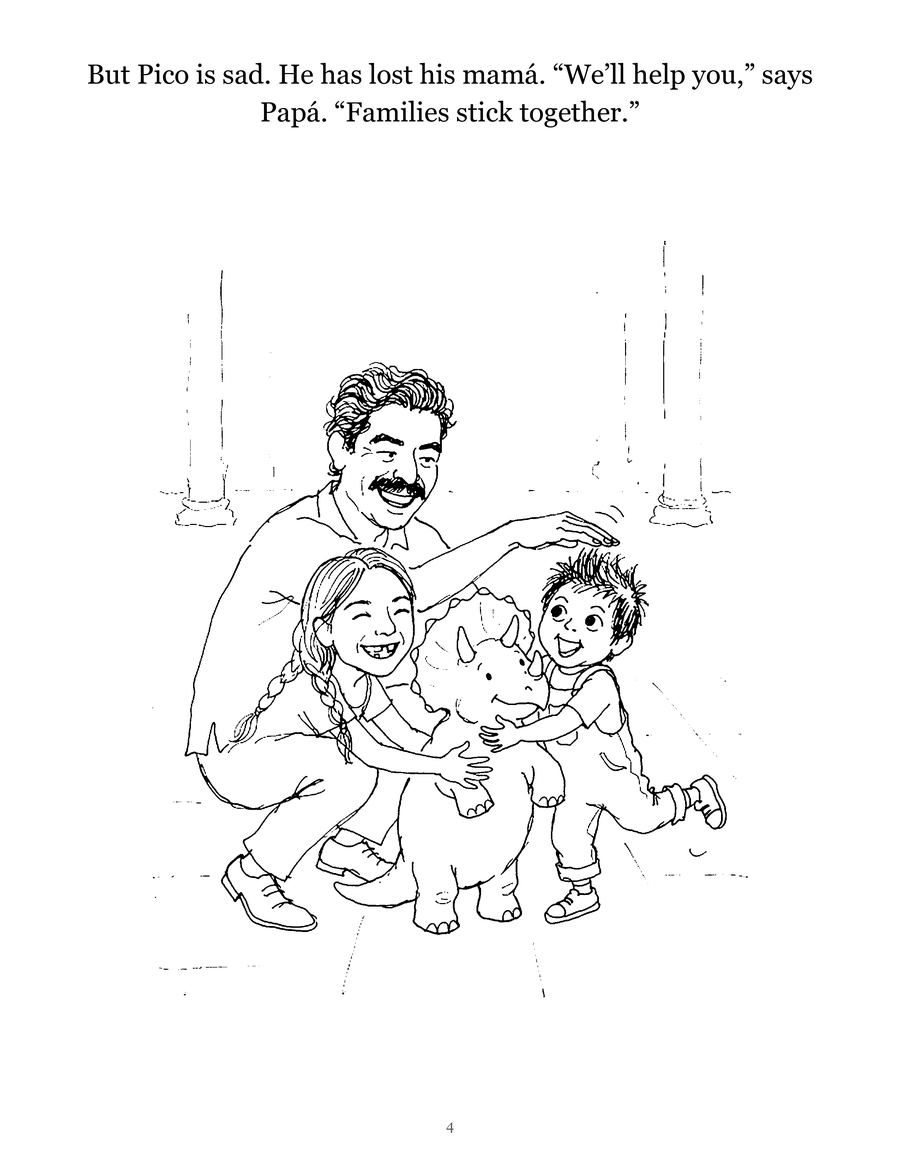
Later, some families like to make a small memory book of the grandparent and the child together, with photos and a few lines each. A stapled booklet is enough. Some services, Colorkin among them, can turn family photos into coloring pages for a book like that, but there is no rush and nothing you need to buy.
Grief comes back around birthdays and holidays, and children revisit questions as they grow. If your child's distress lasts more than a few weeks, or the death was sudden or traumatic, KidsHealth recommends talking with your child's doctor. More guides for hard moments in early childhood are under big moments.
Questions parents ask
How do I tell my toddler that grandma died?
Use short, plain words and the word died: 'I have some sad news. Grandma died. Her body stopped working and she won't come back. We are sad and we will miss her.' Then stay close, answer questions and let them go back to playing if they want to.
Should I say grandpa is sleeping or that we lost him?
No. The AAP, Sesame Workshop and ZERO TO THREE all advise against euphemisms like sleeping, lost or gone away, because young children take them literally and may become afraid of sleep or think the person will come back.
Should a preschooler go to a grandparent's funeral?
It can help, if they want to and you prepare them. KidsHealth suggests telling children ahead of time what will happen, giving them a small role if they like, and having a trusted adult ready to step out with them.
Why does my child keep asking when grandma is coming back?
Preschoolers often do not yet understand that death is permanent. Answer the same question calmly each time. The AAP notes you may need to answer the same questions many times with young children.
What are good books about a grandparent dying?
Nana Upstairs and Nana Downstairs by Tomie dePaola and My Grandson Lew by Charlotte Zolotow are about grandparents specifically. When Dinosaurs Die by Laurie Krasny Brown and Marc Brown and I Miss You by Pat Thomas explain death in plain terms.
See your own family on a page, free
Whenever you are ready, and there is no hurry: send one photo of your child with their grandparent and we will draw a free coloring page for a memory book, no card needed.
Get a free sample pageMore in Big moments
Weaning off the pacifier: when to stop and the story approach
When to wean a toddler off the pacifier, what the AAP and pediatric dentists say, and how a short story about giving it up makes the goodbye easier.
Toddler scared of haircuts? How to make the first cut easier
Why toddlers fear haircuts and how to help: practice at home, picture books, the right salon and time, small steps for sensitive kids and what to do on the day.
Starting daycare: easing drop-off for you and your child
How to start daycare with less crying: visits and practice runs, a goodbye ritual, what to tell the teacher, books about saying goodbye and when to worry.