Starting daycare: easing drop-off for you and your child

Starting daycare goes best when the first separation is not the first time your child has seen the room, met the teacher or watched you leave and come back. Visit a few times together, practice short separations, keep the same quick goodbye ritual every day, and tell your child when you will return in words they understand, like "after nap." Then leave, even if there are tears. KidsHealth recommends visiting a new daycare center together a few times before a full-time schedule begins and practicing short separations first.
There will probably be crying. That is not a sign you chose wrong. The American Academy of Pediatrics calls separation anxiety an entirely normal behavior and a sign of a meaningful attachment.
Why drop-off is hard at this age
Separation anxiety has a schedule of its own. ZERO TO THREE explains that around 7 to 9 months babies begin to understand that when you leave, you are going somewhere they cannot follow. The AAP adds that many toddlers skip it as babies and start struggling at 15 or 18 months, and that it is harder when they are hungry, tired or sick.
That has a practical upshot for timing. KidsHealth suggests, if you have a choice, not starting care with an unfamiliar person between 8 months and 1 year, when separation anxiety is first likely to appear, and scheduling departures after naps and meals. Most families do not get to pick the start date. If yours lands in a clingy phase, the steps below still work. They just take a little longer.
Two weeks before: visits and practice runs
- Visit together. Play in the room while you are there. Meet the teacher by name and use that name at home.
- Practice short separations. An hour with a grandparent or sitter, then a morning. KidsHealth suggests inviting a new caregiver over while you are still in the room.
- Rehearse the morning. The AAP suggests practicing going to school and your goodbye ritual before you have to part ways.
- Start the routine early. Wake-up time, breakfast, getting dressed and the drive at the real times, a few days before the real thing.
- Talk about it plainly. "You will play at daycare with Ms. Ana. I will go to work. I will come back after nap."
- Ask about a gradual start. Many centers allow shorter days in the first week. If yours does, take it.
The goodbye ritual
Pick a ritual and keep it the same every single day. The AAP suggests anything from a special handshake to triple kisses at the cubby, as long as the goodbye is short. Give full attention, be loving, and then go.
A few rules that the sources agree on:
- Never sneak out. ZERO TO THREE warns that sneaking away makes a child worry you might leave at any time, which makes separation anxiety worse.
- Do not come back in. The AAP author describes how returning to "visit" after a hard drop-off extended the anxiety and started it all over again.
- Say when you will return in their terms. "After nap and before afternoon snack" means something. "At 3:00" does not.
- Come back when you said. KidsHealth calls following through on that promise critical, because it is how a child learns they can make it through the time apart.
- Stay calm yourself. ZERO TO THREE suggests leaving without making a big deal or getting upset, because the teachers know how to help with big feelings.
What to give the teacher
A small bit of home goes a long way. ZERO TO THREE suggests giving your child's educator something that reminds your child you will be back, like a photo of your family together or a T-shirt you have worn.
Other useful things to hand over:
- Their comfort object, if the center allows it, labeled.
- A note with the words your child uses for things: their name for the bottle, the potty, the blanket, you.
- How they fall asleep and how they like to be soothed.
- One or two things they love to talk about, so the teacher has an easy way in.
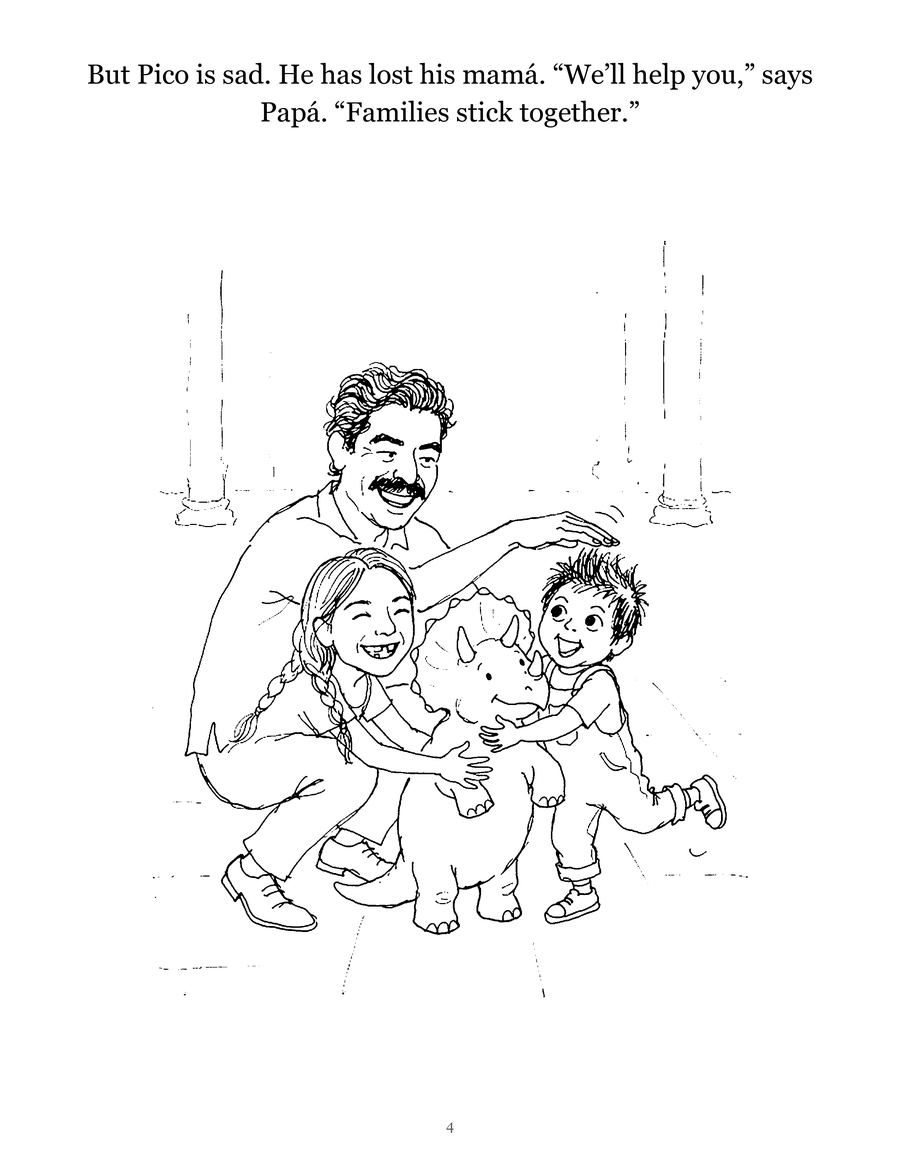
A small family photo book in the cubby helps many children. You can make one with printed photos and clear tape. If your child likes coloring, a page with your family on it works too; our guide to coloring pages of your family shows free ways to make one.
Books about saying goodbye
These are real titles available at many public libraries. Read them at home in the weeks before, not in the car on the first morning.
- Bye-Bye Time by Elizabeth Verdick. A board book for ages 1 to 4 about being dropped off at childcare, with simple rituals: hugs, a big wave, a deep breath. There is an English and Spanish edition.
- When I Miss You by Cornelia Maude Spelman. A young guinea pig describes when he misses his parents, how it feels and what helps.
- Owen by Kevin Henkes. Owen's parents try to part him from his blanket before school, and find a clever compromise. Good for a child who needs their comfort object.
- I Love You All Day Long by Francesca Rusackas. A little pig worries about being apart from his mother at school, and she reassures him.
Several more good choices, including Llama Llama Misses Mama and Owl Babies, are in our first day of preschool books guide. If your toddler does well with a story about their own day, a simple social story with photos of your actual daycare is often the most effective book of all.
The first weeks, and when to worry
Many children do well for a few days, then fall apart once they realize daycare happens every day. Hold the routine steady. Ask the teacher how long the crying lasts after you leave. KidsHealth notes that by the time you reach your car, your child is likely to have calmed down and be playing.
Expect tired evenings and maybe some clinginess at home. Keep pickup cheerful and the evening simple.
Trust your instincts, too. The same KidsHealth page says that if a child refuses a certain caregiver or daycare, or shows tension such as trouble sleeping or loss of appetite, there could be a problem with the childcare situation. Talk to the director. If intense separation anxiety lasts into the preschool years and interferes with daily life, talk to your pediatrician.
When the time comes to move up to preschool, our guide to preparing for the first day of preschool picks up from here. More guides for early transitions are under big moments.
Questions parents ask
How long does it take a toddler to adjust to daycare?
It varies a lot. Some children settle in days, others take weeks, and many have a second wobble after the novelty wears off. A consistent drop-off routine and coming back when you said you would are what shorten it.
Should I sneak out so my child doesn't see me leave?
No. ZERO TO THREE warns that sneaking away makes a child worry you might leave at any time. Say a short, loving goodbye, then go, even if they cry.
Is it normal for my child to cry at daycare drop-off?
Yes. KidsHealth describes tearful goodbyes as common in the earliest years, and notes that most children calm down soon after the parent leaves. Ask the teacher how long the tears last; that tells you more than the drop-off itself.
When should I worry about daycare?
KidsHealth says to trust your instincts if your child refuses a particular caregiver or shows signs of tension such as trouble sleeping or loss of appetite. Talk to the director, and to your pediatrician if intense separation anxiety lasts into preschool and interferes with daily life.
See your own family on a page, free
Want a page your child can carry to daycare with your family on it? Send one photo and we will draw a free coloring page of you together, no card needed.
Get a free sample pageMore in Big moments
Weaning off the pacifier: when to stop and the story approach
When to wean a toddler off the pacifier, what the AAP and pediatric dentists say, and how a short story about giving it up makes the goodbye easier.

Toddler scared of haircuts? How to make the first cut easier
Why toddlers fear haircuts and how to help: practice at home, picture books, the right salon and time, small steps for sensitive kids and what to do on the day.

Social stories for toddlers: what they are and how to make one
A social story is a short, personal book that walks a child through a new situation before it happens. What the research says and a template for toddlers.