Dia de los Muertos coloring pages for kids, explained
Día de los Muertos coloring pages work best when they show what families actually do: build an ofrenda with photos, candles, flowers and a loved one's favorite foods, hang papel picado, and set out smiling calaveras. The National Museum of Mexican Art in Chicago says Mexican families on both sides of the border gather each November 1 and 2 to welcome back the souls, and the memories, of their loved ones. Below is a simple way to explain the day to young kids, page ideas you can draw yourself, free community workshops, and picture books by Mexican authors.
A note on approach: this is a family and community tradition, and every region and family keeps it differently. Each tradition below is linked to a museum or cultural organisation that celebrates it.
What Día de los Muertos is, for kids
UNESCO, which inscribed the indigenous festivity on its Representative List of the Intangible Cultural Heritage of Humanity in 2008, describes Día de los Muertos as practiced by the indigenous communities of Mexico to commemorate the temporary return to Earth of relatives and loved ones who have died. It says families lay flower petals, candles and offerings along the path from the cemetery to their homes, and prepare the favorite dishes of the people they remember. The National Museum of Mexican Art adds that the day is rooted in ancient Mesoamerican beliefs and Catholicism, and that each region of Mexico has its own customs.
For a three- or four-year-old, keep it warm and simple: "This is a day to remember people we love who have died. We put out their pictures and the foods they liked, and we tell stories about them, so we don't forget."
It sits right next to Halloween on the calendar, and both have skeletons, but the feeling is different. Día de los Muertos is about family and remembering, not scaring.
Coloring page ideas and what each one means
| Page | What to draw | What to say while coloring |
|---|---|---|
| The ofrenda | A table with two or three steps, photo frames, candles, flowers and plates of food | "This is where we put pictures of people we remember." |
| Marigolds | Big round flowers with ruffled petals, in a jar or a long path | "Families lay flower petals to make a path home." |
| Papel picado | A string of paper flags, each with a simple cut-out pattern | "People cut patterns into tissue paper and hang it up." |
| Calaveras | A smiling skull with flowers and swirls, plenty of white space | "These skulls are smiling, not scary." |
| A favorite food | One plate with the food a grandparent loved | Ask your child what they would put out. |
| A photo frame | An empty frame in the middle of the page | Let your child draw someone they remember, or a pet. |
The flower path and the food come from UNESCO's description, which also mentions handicrafts such as paper cut-outs placed with the offerings. Self Help Graphics & Art, the Los Angeles community arts center, describes papel picado as tissue paper with cutout shapes, and its free family workshops include papel picado, paper marigolds, calavera masks and sugar skull magnets.
The calavera drawings themselves have a history kids love. Abrams, the publisher of Duncan Tonatiuh's picture book on the subject, explains that the famous calaveras are the creation of Mexican artist José Guadalupe Posada (1852 to 1913), who learned printing young, ran his own shop and drew political cartoons.
How to draw them at home in five minutes
A calavera. Draw an upside-down egg for the skull and a smaller rounded rectangle under it for the jaw. Add two big round eye sockets, an upside-down heart for the nose, and a row of small rectangles for teeth. Then decorate: flowers around the eyes, dots on the forehead, swirls on the cheeks. Keep the shapes big for toddlers. For older kids, fill the whole forehead with petals.
Papel picado. Draw a line across the top of the page. Hang five or six rectangles from it, each with a scalloped bottom edge. Inside each one, draw a simple cut-out shape: a flower, a star, a heart, a skull. Kids can color the flags in bright alternating colors.
An ofrenda. Draw three stacked boxes, widest at the bottom, like steps. On the top step draw one or two photo frames. Add candles at the ends, a jar of marigolds and a few plates on the lower steps. Leave the frames empty.
Trace your final lines with a black marker, then photocopy or scan the page so kids can try more than once. Our guide to how to print coloring pages covers getting dark lines from a phone photo.
Activities to go with the coloring
- Make your own family ofrenda. A shelf or small table, a cloth, a photo of a grandparent, a candle (battery ones for little kids), flowers and one food they loved. Let your child place the photo.
- Fill the photo frame. Have your child draw someone they remember, then tell one story about that person while they color.
- Paper marigolds. Stack a few sheets of orange or yellow tissue paper, fold them like a fan, tie the middle and gently pull the layers apart.
- Go to a community celebration. Many museums and cultural centers hold free events. The National Museum of Mexican Art invites visitors to add a note, drawing or memory to its community ofrenda, the Mexic-Arte Museum in Austin runs a Día de los Muertos exhibition, and Self Help Graphics runs free all-ages craft workshops with all materials provided.
Día de los Muertos is also a gentle way to talk with a young child about death. If your family has had a recent loss, our guide to books about losing a pet has more ideas for talking about it at a child's level.
Picture books by Mexican authors
| Book | Author | What it is about |
|---|---|---|
| Funny Bones: Posada and His Day of the Dead Calaveras | Duncan Tonatiuh | How Posada's calaveras came to be. Tonatiuh writes on his site that he is both Mexican and American and grew up in San Miguel de Allende. A good pick for kids who like true stories. |
| Just a Minute: A Trickster Tale and Counting Book | Yuyi Morales | Señor Calavera arrives at Grandma Beetle's door, and she keeps saying "just a minute" while she counts out her birthday preparations in English and Spanish. Funny rather than spooky, and good for counting. |
After reading, hand over a calavera page and let your child give it Señor Calavera's hat.
A page with your own family in it
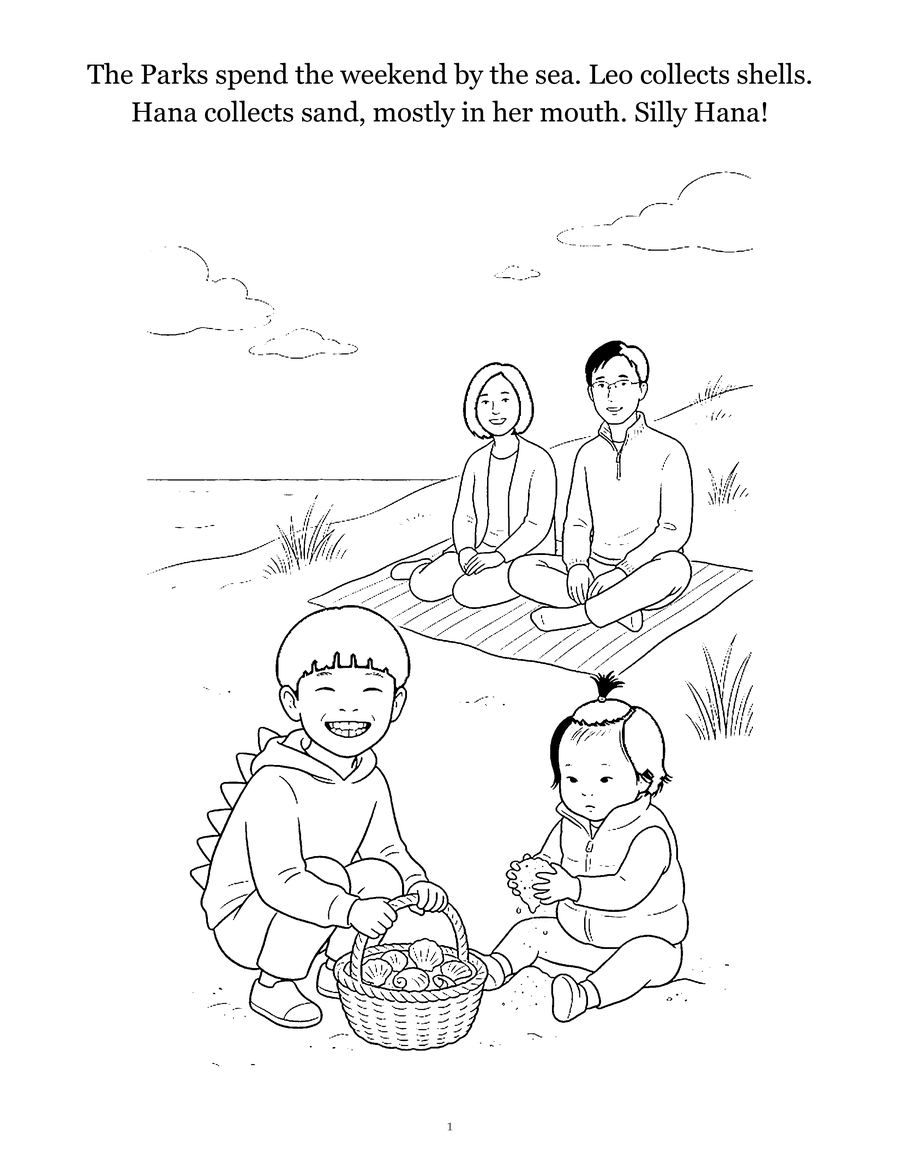
The most meaningful Día de los Muertos page is a family one: your kids next to an ofrenda with a grandparent's photo, or the whole family carrying marigolds. Stick figures are fine. If you want to start from a photo, our guide to turning a photo into a coloring page for free shows how.
Colorkin can also draw a page of your family from a photo, drafted with AI illustration tools and checked and finished by a person, and the free sample is an easy way to try it.
For other holidays and heritage, see our family and heritage guides.
Questions parents ask
When is Día de los Muertos?
The National Museum of Mexican Art says Mexican families gather each November 1 and 2 to welcome back the souls and memories of their loved ones. UNESCO describes the festivities as running from the end of October to the beginning of November.
Is Día de los Muertos the same as Halloween?
No. They sit next to each other on the calendar and both use skulls and skeletons, but Día de los Muertos is about remembering and welcoming back family members who have died, with ofrendas, flowers, food and photos.
What should a Day of the Dead coloring page show?
An ofrenda with photos, candles, flowers and a loved one's favorite foods, marigolds, papel picado banners, and smiling calaveras. A page where a child draws a photo of someone they remember is the most meaningful.
Is it OK for non-Mexican families to do Day of the Dead crafts?
Community arts centers such as Self Help Graphics in Los Angeles run free Día de los Muertos workshops open to all ages. Learn what the symbols mean, keep the focus on remembering loved ones, and treat it as a family tradition rather than a costume theme.
See your own family on a page, free
Want a Día de los Muertos page with your own family building the ofrenda together? Send one photo and we will make a free sample coloring page. No card needed.
Get a free sample page- National Museum of Mexican Art, Where Memory Lives: 40 Years of Día de Muertos
- UNESCO Intangible Cultural Heritage, Indigenous festivity dedicated to the dead
- Self Help Graphics & Art, Día de los Muertos
- Mexic-Arte Museum, Austin
- Abrams Books, Funny Bones: Posada and His Day of the Dead Calaveras by Duncan Tonatiuh
- Duncan Tonatiuh, About
- Just a Minute: A Trickster Tale and Counting Book by Yuyi Morales (Internet Archive record)
More in Family and heritage
Wigilia with kids: Polish Christmas Eve traditions to share
How to share Wigilia with young kids: watching for the first star, breaking opłatek, the empty chair and twelve dishes, plus coloring pages and crafts.
Tết activities and coloring pages for Vietnamese American kids
Tết activities for kids: bánh chưng, apricot blossoms, red envelopes and the Kitchen God, with coloring page ideas and Vietnamese American picture books.
Three Kings Day for kids: Día de Reyes traditions and pages
Three Kings Day for kids: what January 6 celebrates, letters to the Kings, parades, rosca de reyes, Puerto Rican carols, coloring page ideas and books.