First flight with a toddler: prep, plane activities and a story
A first flight with a toddler goes best when three things are sorted before you leave home: a seat plan (the FAA strongly recommends an approved car seat in your child's own seat, even under age 2), a calm run through security (TSA has gentler screening for kids 12 and under), and a small bag of activities you hand out one at a time. Add a short story about the trip, read a few times in the week before, so the airport is not a total surprise. The rest is snacks, water and patience.
Seats and car seats: what the FAA says
US airlines let children under 2 fly on a parent's lap, but the FAA does not recommend it. Its Kids' Corner page for parents says the safest place for a child under two is in an approved child restraint system or device, not your lap, because your arms cannot hold a child securely during unexpected turbulence. The same page notes that buying a ticket for your child is the only way to guarantee you can use one. The AAP's Flying With Baby guide puts it plainly: turbulence is the leading cause of children's injuries on airplanes.
What counts as approved, per the FAA:
- A hard-backed car seat labeled "This restraint is certified for use in motor vehicles and aircraft." Check the sticker before you go, and read the manual to confirm it can be installed with a lap belt.
- The CARES harness, certified for children up to 40 inches tall and 22 to 44 pounds who can sit upright in their own seat. It is approved for aircraft only, not cars, and the FAA warns about counterfeits sold online, so buy from the manufacturer.
- Not allowed during taxi, takeoff and landing: booster seats, backless seats and baby carriers.
If your approved seat does not fit the seat you were assigned, the FAA says the airline must find another seat for it in the same class. The AAP suggests the window seat, especially for a rear-facing car seat so it does not block anyone's way out, and boarding early to install it without a line behind you. It also points to the US Department of Transportation's dashboard of which airlines guarantee adjacent seats for a child under 13 at no extra charge.
If you are not using the car seat on board, the AAP says car seats and strollers generally do not count as luggage and can often be checked at the gate, but airline policies change, so check before you book.
Getting through security with a toddler
TSA's Traveling with Children page is worth reading the night before. The parts that matter for a toddler:
- Modified screening applies to children who appear to be 12 or younger, and children are not separated from their parent or guardian.
- Shoes stay on. Kids 12 and under can keep shoes, light jackets and hats on.
- Out of the stroller. Take your child out of the stroller or car seat and carry them through the metal detector. Strollers, car seats and backpacks go through the X-ray.
- Snacks and drinks are fine. Baby and toddler food, including puree pouches, toddler drinks, formula and breast milk are allowed in amounts over 3.4 ounces and do not need to fit in the quart bag. Tell the officer at the start and take them out for separate screening. Ice packs are allowed too.
- Need help? TSA Cares (855-787-2227) takes calls 72 hours before travel for children with disabilities or medical needs.
Practice the security bit at home: put a backpack on a "belt" (the couch), walk through a doorway "machine", collect the backpack on the other side. A toddler who has rehearsed the beeping doorway is far less likely to melt down at the real one.
Ears, sleep and medicine
Ear pressure is the thing parents dread most. KidsHealth's page on how flying affects ears explains that the pain is temporary and that descent is when many little ones cry, because cabin pressure rises as the plane comes down. Its suggestions: keep your child drinking water throughout the flight, offer a bottle, cup or pacifier, gum or hard candy only for kids over 3, and try to keep them awake for takeoff and landing, since we swallow less in sleep. If your child has an ear infection, talk to your doctor before flying.
One thing to skip without a doctor's say-so: Benadryl. The AAP warns against giving diphenhydramine to make a child sleepy on a flight without asking your pediatrician, and notes some children get more wound up on it, not less.
A bag of plane activities for toddlers
The trick is not one great toy. It is ten small, quiet things, handed out one at a time, each one new for a few minutes. The AAP's guide says a tablet is a fine backup when nothing else works, so pack one and do not feel bad about it.
| Activity | Why it works on a plane |
|---|---|
| Sticker book or a sheet of dot stickers | Peel, stick, repeat. Silent, flat, no pieces to drop |
| A roll of painter's tape | Stick strips on the tray table and peel them off, or make "roads" for a tiny car |
| Triangular crayons and a few coloring pages | They do not roll off the tray. A page of your own trip works best |
| Window clings | Stick them on the window and move them around |
| A board book or two about planes | Reread the trip story right there in the seat |
| Pipe cleaners and an empty spice jar | Push them through the holes in the lid |
| A small wrapped surprise | Unwrapping is half the fun. Save it for the descent |
| Snacks in a container with compartments | Eating takes time, and swallowing helps ears |
Avoid anything loud, anything with a hundred small pieces, and slime.
Read about it first: books and a story of their own
Small children cope better with things they have rehearsed. Picture books about planes help, and most libraries carry these:
- Airport by Byron Barton: from arriving at the airport to the plane in the air, in simple pictures.
- The Noisy Airplane Ride by Mike Downs: rhyming text about every sound on a flight and what it means, useful for a child startled by the landing gear.
- Maisy Goes on a Plane by Lucy Cousins: check-in, security, a window seat and waiting for the bathroom.
- Flying by Donald Crews: a plane takes off, flies over cities and lakes, and lands.
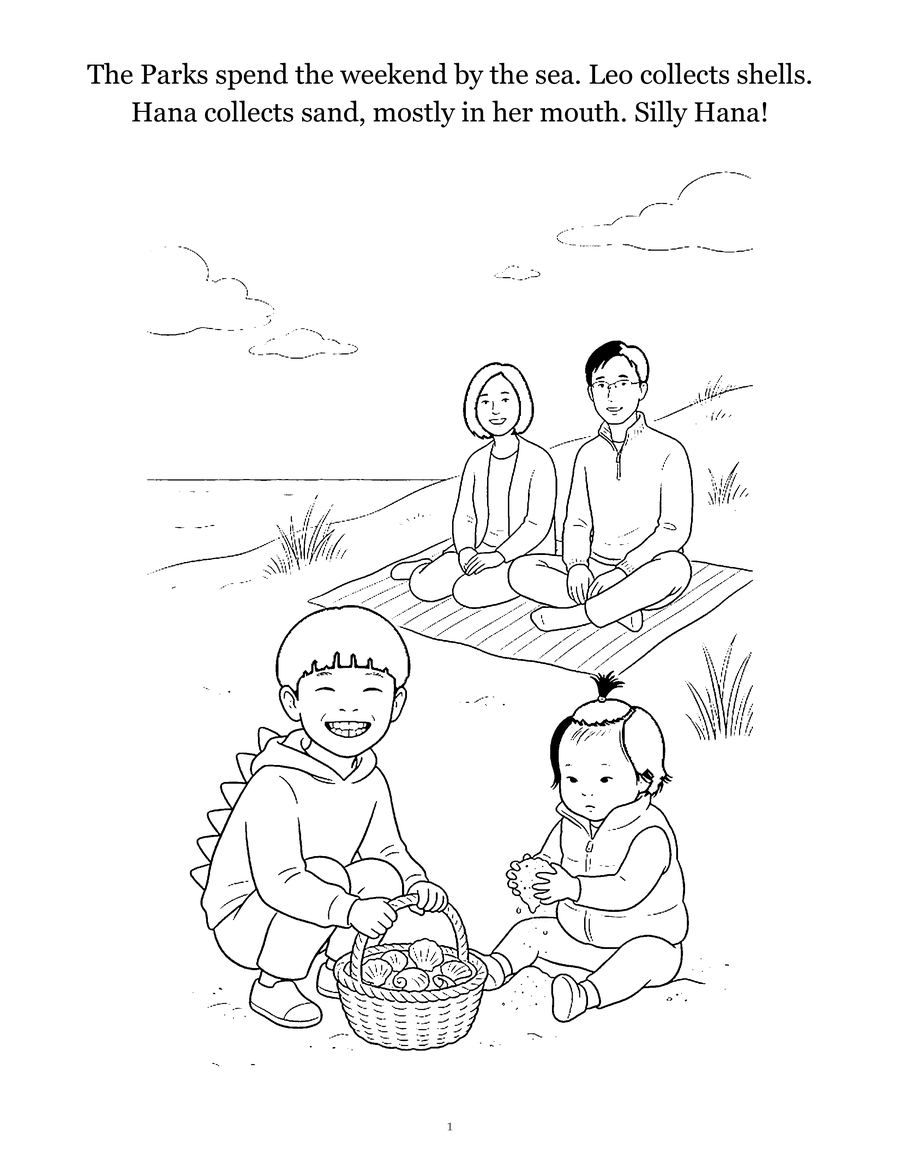
Better still, make a short book about your own trip with your child in it: our house, packing my bag, the airport, walking through the beeping doorway, buckling into my seat, the noisy part, looking out the window, landing, Grandma waiting. A social story like this works because it uses your child's real day. There is a template in social stories for toddlers, and the general how-to is how to write a short story starring your child. Print it as coloring pages and it doubles as a plane activity.
If you want the story drawn for you, there are options: photo book services, name-personalized storybooks, or a custom coloring storybook like Colorkin's, where pages are drafted with AI illustration tools from your family photos and checked and finished by a person. The stapled homemade version does the job too.
On the day
- Get to the airport earlier than you think you need to. Rushing is what turns a toddler's mood.
- Let your child walk (or run) as much as possible before boarding.
- Change the diaper right before you board.
- Pack a full change of clothes for your child and a spare shirt for you.
- Praise the specific thing: "You sat in your seat for the whole bumpy part."
If the trip is part of a move, see helping a toddler with moving. For other first-time experiences, from the dentist to a new baby, see our big moments guides.
Questions parents ask
Does my toddler need their own seat on a plane?
Children under 2 may fly on a lap in the US, but the FAA strongly urges an approved car seat or harness in the child's own seat, and buying a ticket is the only way to guarantee you can use one.
Can I bring toddler snacks and pouches through airport security?
Yes. TSA allows baby and toddler food, including puree pouches, and toddler drinks in amounts over 3.4 oz in carry-ons. Tell the officer at the start and take them out for separate screening.
Do toddlers have to take their shoes off at TSA?
No. TSA says children 12 and under can keep shoes, light jackets and headwear on during screening, and children are not separated from their parent.
How do I help my toddler's ears on the plane?
Keep them drinking and swallowing during takeoff and especially descent, and try to keep them awake for those parts. KidsHealth notes gum or hard candy only for kids over 3.
What should I pack to keep a toddler busy on a plane?
A few small, quiet things you can hand out one at a time: stickers, painter's tape, crayons, a board book, a coloring page of their own trip, and plenty of snacks.
See your own family on a page, free
A page showing your child buckled in by the plane window makes a good story for the week before you fly. Send one photo for a free sample coloring page, no card needed.
Get a free sample page- Federal Aviation Administration, Kids' Corner: flying with children
- TSA, Traveling with Children
- HealthyChildren.org (AAP), Flying With Baby: Parent FAQs and Tips for Safer, Easier Air Travel
- Nemours KidsHealth, How Does Flying Affect Ears?
- Seattle Public Library catalog, The Noisy Airplane Ride by Mike Downs
More in Big moments
Weaning off the pacifier: when to stop and the story approach
When to wean a toddler off the pacifier, what the AAP and pediatric dentists say, and how a short story about giving it up makes the goodbye easier.
Toddler scared of haircuts? How to make the first cut easier
Why toddlers fear haircuts and how to help: practice at home, picture books, the right salon and time, small steps for sensitive kids and what to do on the day.
Starting daycare: easing drop-off for you and your child
How to start daycare with less crying: visits and practice runs, a goodbye ritual, what to tell the teacher, books about saying goodbye and when to worry.