Guides / Coloring and development
When do toddlers learn colors? Ages, mix-ups and how to help
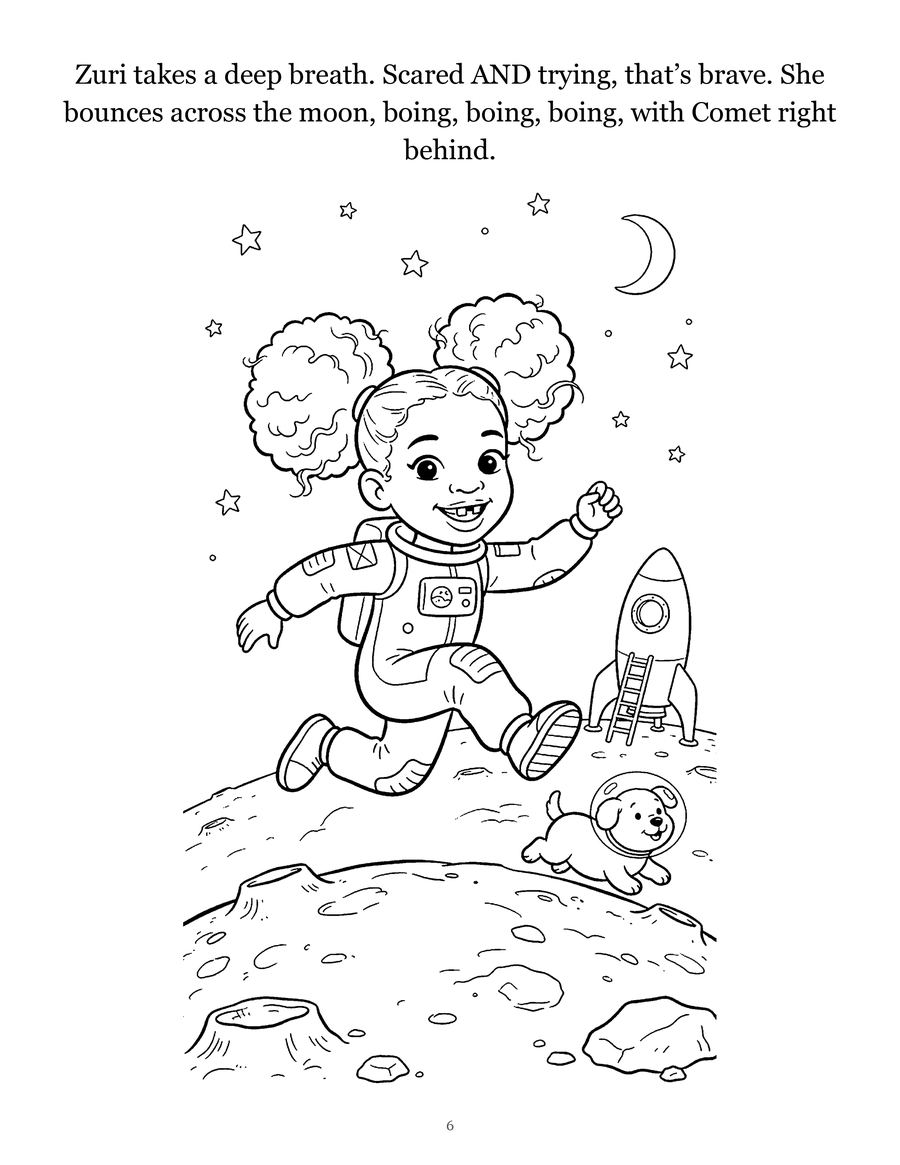
Most toddlers can pick out at least one color by about two and a half, and name a few colors by 4. Those are the CDC milestones: at 30 months, a child "shows he knows at least one color, like pointing to a red crayon" when you ask which one is red, and by 4 years a child "names a few colors of items". Plenty of children get there sooner. If your two-year-old says "blue" for everything, that is a normal step, not a mistake to fix.
When I made the first coloring storybook for my kids, I noticed how much of our time with the pages was color talk. That made me curious how kids actually learn colors. The short answer: slowly, with a lot of confident wrong answers along the way.
The milestones, and how to read them
The CDC's checklists were revised in 2022, and each milestone is now something 75 percent or more of children are expected to do by that age. So these are not averages. A child who names colors at 2 is not unusual, and the 4-year milestone is a point by which most kids can do it, not the age they start.
| Age | CDC milestone | What it looks like |
|---|---|---|
| 30 months | Knows at least one color | Points to the red crayon when you ask "which one is red?" |
| 4 years | Names a few colors of items | "The car is red." "My shirt is green." |
Notice the order. Pointing to the right color when you name it comes first. Saying the color word yourself, correctly, comes later.
Why color words take so long
Colors seem simple to adults, so it can be puzzling that a child who knows "dinosaur" and "excavator" still calls a green cup blue. Researchers have a few explanations.
Kids use color words before they know the boundaries. A 2013 study from the University of California, San Diego looked at toddlers' early color errors and found they were not random. Children made systematic guesses that were best described as overextensions: "blue" might cover blue and green because the child's category is too broad. The authors argue the delay is mostly about learning where a particular language draws the lines between colors, not about failing to understand that the word refers to color.
It is slow everywhere. A three-year study compared English children with children in a semi-nomadic community in Africa whose language has five color terms. Both groups acquired color vocabulary slowly and with great individual variation. Slow and uneven is the norm, not a sign of a problem.
Color words go along with color perception. A 2020 study of 3 and 4 year olds found that children who knew more color words also did better at matching colors under different lighting, even after accounting for age. That is a correlation, so it does not show that learning words improves seeing, or the reverse.
Benefits of color recognition for toddlers
Search results promise a long list of benefits from learning colors. Here is what holds up. Color words are part of language, and the CDC files the 4-year color milestone under cognitive development, next to telling what comes next in a story and drawing a person. Colors are also one of the easiest ways for a toddler to describe the world: "the red one", "my blue cup". That is reason enough to talk about them.
What I could not find is good evidence that early color naming, on its own, predicts later school success, or that drilling colors speeds anything up. Be skeptical of articles that claim either.
How to help without drilling
If the hard part is learning where one color ends and the next begins, it makes sense to give kids lots of examples, including what is not blue. That points to everyday talk over flashcards:
- Name colors in passing. "Here is your green cup." "Do you want the yellow banana or the green one?" Choices give two examples at once.
- Contrast, do not correct. If they call a green truck blue, try "that one is green, this one is blue" rather than "no, wrong."
- Sort things. Socks, blocks, crayons into piles by color. It is a game and a lesson.
- Do not turn art into a quiz. Zero to Three cautions that parents often ask "what's the name of that color?" during drawing, and suggests children learn more when we ask what they are thinking about their picture. Save color talk for natural moments.
- Use their world. Their own coat, their dog, their front door. Personal objects give a color word a hook.
Does coloring teach colors?
Coloring gives you dozens of natural moments to talk about colors, especially when a child picks a color on purpose. But there is no research showing coloring teaches colors better than any other daily color talk, and a purple sky is not a wrong answer on a coloring page. For what coloring does do, see benefits of coloring for toddlers, and for the tools that make color choices easy for small hands, crayons vs markers for toddlers.
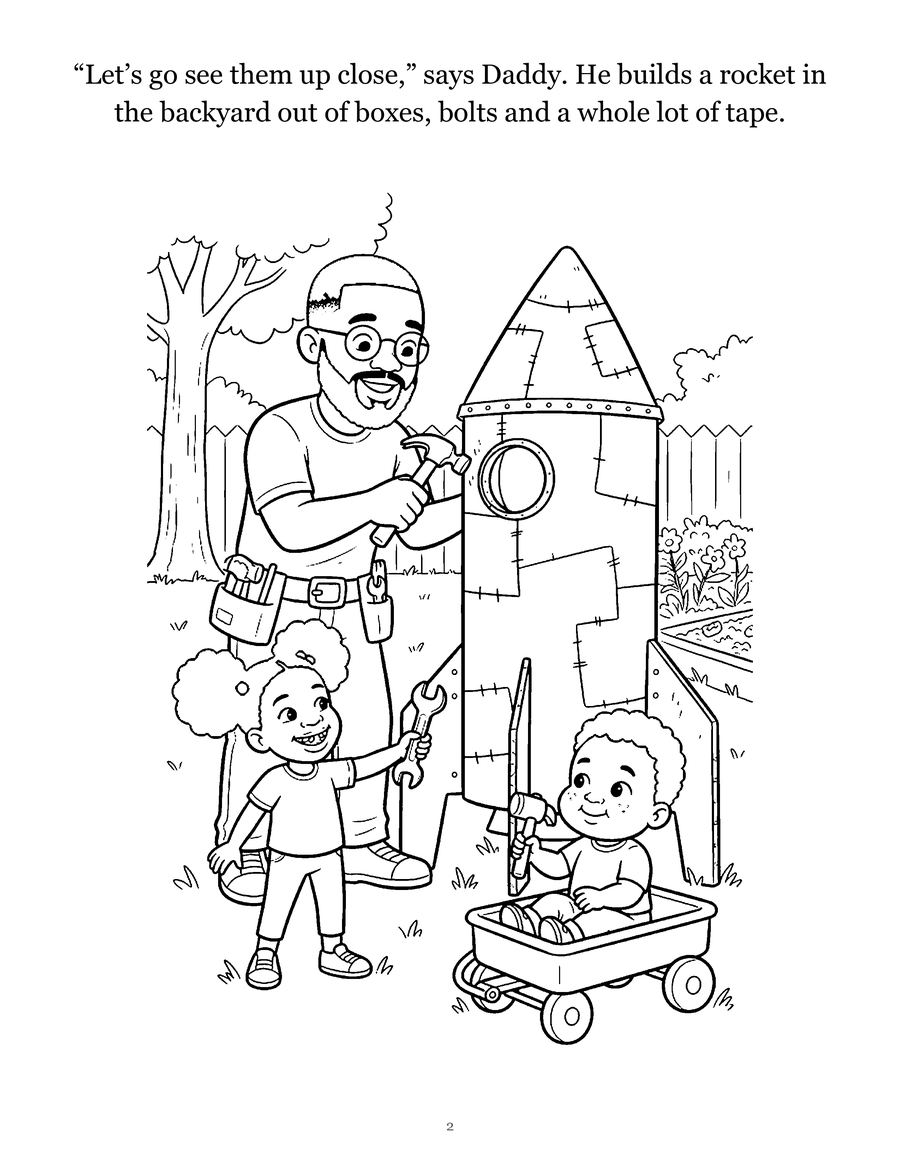
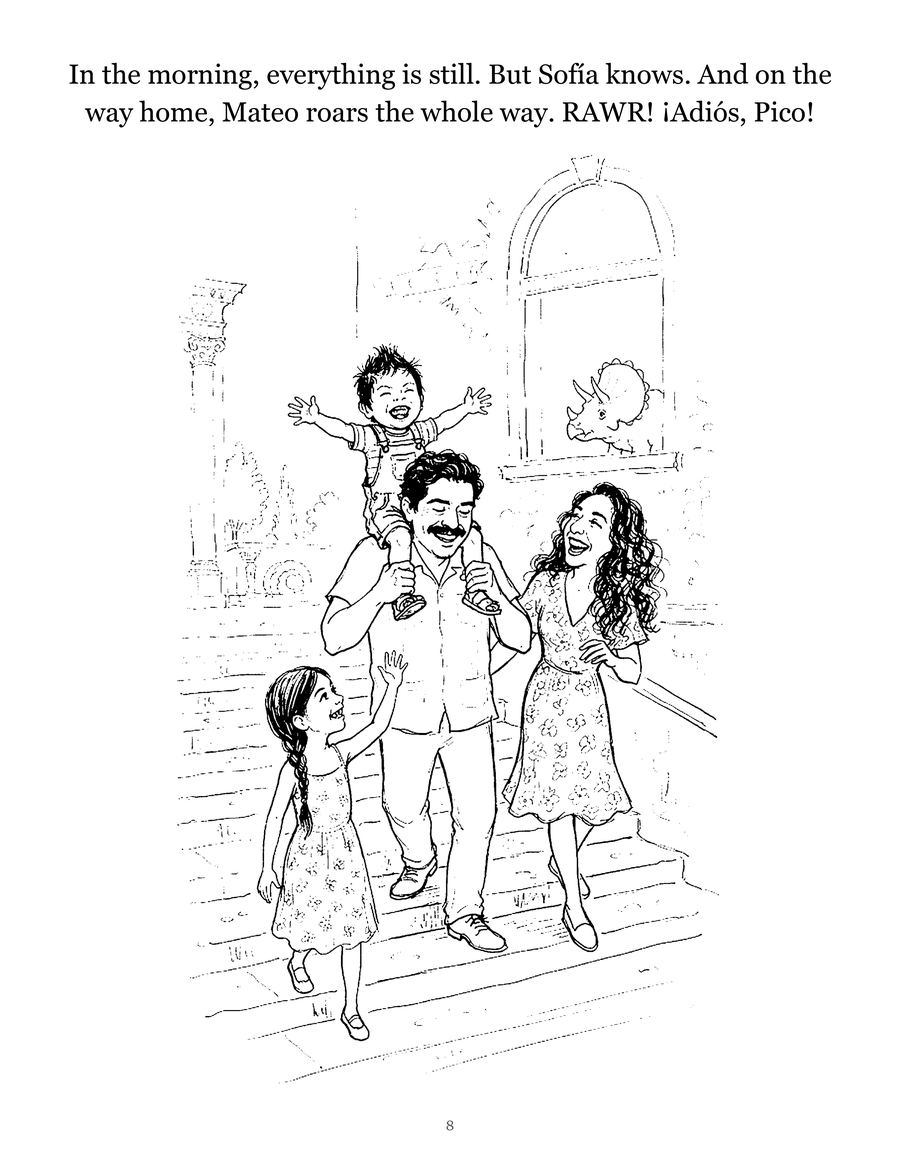
Pages that show a child's own family tend to get the most talk, and color talk comes along with it.
When to check with a doctor
If your child is past 4 and still cannot name any colors, mention it at the next checkup alongside the rest of the milestone checklist. Color vision is worth thinking about too. The National Eye Institute says color vision deficiency is much more common in males, can be tricky to spot in children, and recommends getting a child's eyes tested if they seem to have trouble learning colors or have a family history of it.
More age-by-age guides are in coloring and development, including benefits of coloring for preschoolers.
Questions parents ask
When should a toddler know colors?
The CDC milestone at 30 months is knowing at least one color, like pointing to the red crayon when asked. By 4, the milestone is naming a few colors of things.
Is it normal for my 2-year-old to call everything blue?
Yes. Research on early color words finds toddlers often use a color word too broadly before they learn where one color ends and the next begins.
Can coloring help toddlers learn colors?
It gives you lots of natural chances to talk about colors. There is no research showing coloring teaches colors better than other everyday color talk.
Could trouble with colors mean color blindness?
Sometimes. The National Eye Institute suggests getting a child's eyes tested if they seem to have trouble learning colors or there is a family history of color vision deficiency.
See your own family on a page, free
Color talk is easiest when the page is about them: what color is your shirt, your dog, your door? Send one photo and we will draw a free page of your family, no card needed.
Get a free sample page- CDC, Milestones in Action: By 30 Months
- CDC, Milestones in Action: By 4 Years
- Zubler et al., Evidence-Informed Milestones for Developmental Surveillance Tools, Pediatrics 2022
- Wagner, Dobkins and Barner, Slow mapping: color word learning as a gradual inductive process, Cognition 2013
- Roberson et al., The development of color categories in two languages: a longitudinal study, J Exp Psychol Gen 2004
- Rogers et al., Color constancy and color term knowledge are positively related during early childhood, J Exp Child Psychol 2020
- National Eye Institute, Color Blindness
- Zero to Three, Learning to Write and Draw
More in Coloring and development
When do toddlers recognize themselves in mirrors and photos?
Babies enjoy mirrors by 6 months, but most recognize themselves around 18 to 24 months, and photos of the past make sense later. What the mirror test shows.
When can toddlers start coloring? Ages, grips and first steps
Most kids scribble by 18 months, copy a circle around 3 and hold a crayon in their fingers by 4. What to expect at each age and how to start.
Stages of drawing development in children: scribbles to people
How children's drawing develops from random scribbles at 15 months to tadpole people around 3 and detailed figures by 5, and what each stage means.