Guides / Coloring and development
Stages of drawing development in children: scribbles to people
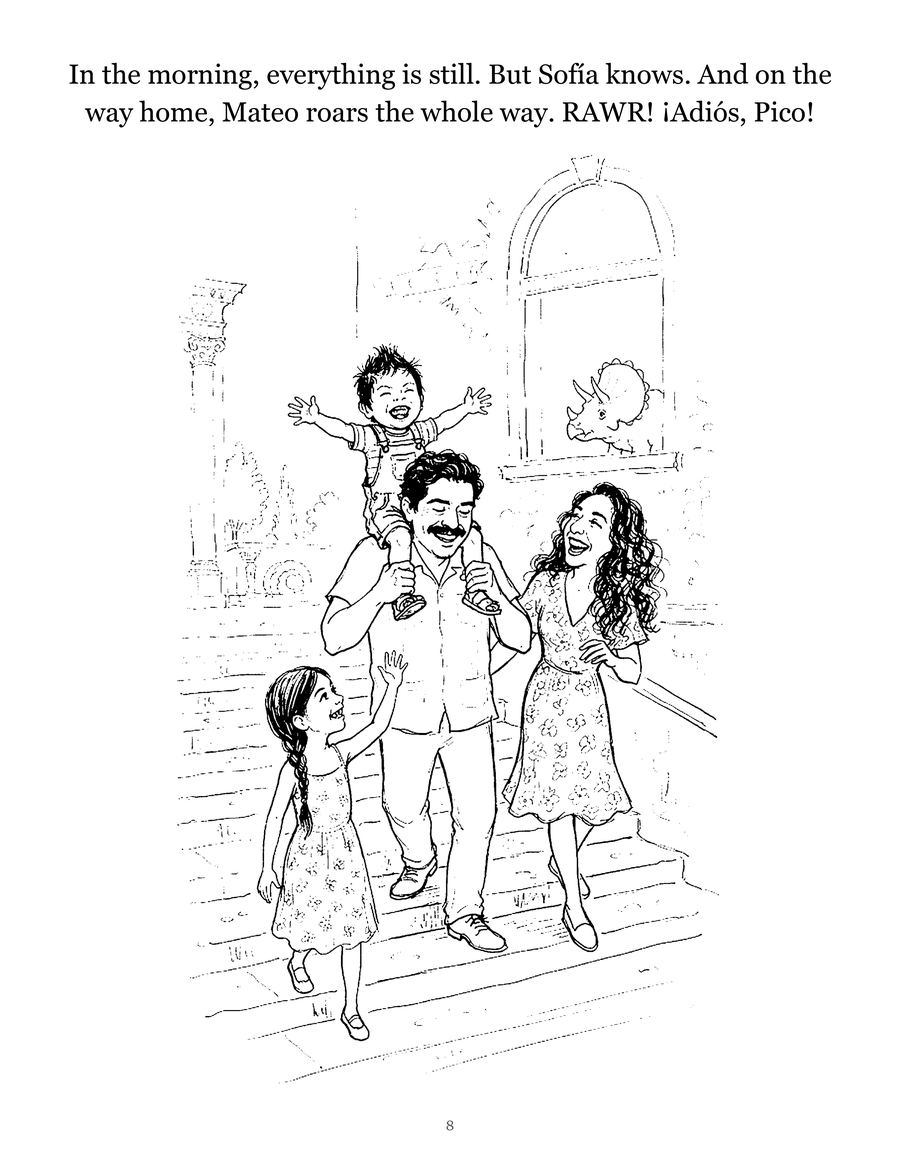
Children's drawing usually moves through five overlapping stages: random scribbles from about 15 months, controlled scribbles from about 2, lines and patterns from about 2 and a half, pictures of people and objects from about 3, and letters mixed into their art between 3 and 5. Those are the stages and ages used by Zero to Three, which stresses that the timetable is approximate and a child can be faster or slower and still be developing just fine. The first recognizable person, a round head with two legs, tends to show up around 3.
I started reading about this after I made the first coloring storybook for my kids and wondered what their scribbles in the margins were, developmentally. It turns out researchers have argued about that exact question for most of a century.
The five stages at a glance
| Stage | Rough age | What you see |
|---|---|---|
| Random scribbling | 15 months to 2 and a half | Big marks from the shoulder, crayon in a fist. The joy is in making a mark at all. |
| Controlled scribbling | 2 to 3 | Repeated marks: open circles, curved, diagonal, horizontal and vertical lines. |
| Lines and patterns | 2 and a half to 3 and a half | Lines, dots and curves that look like pieces of letters. A child may "write" and tell you what it says. |
| Pictures of objects or people | 3 to 5 | First named after the fact, later planned. Suns, people, more colors and more detail. |
| Letter and word practice | 3 to 5 | Letters from their own name, pretend letters, short and long "words" under a picture. |
Source: Zero to Three, Learning to Write and Draw.
Scribbling: more than motor practice
For most of the 20th century, scribbles were treated as a warm-up. A 2015 paper in Frontiers in Psychology summarizes the older view: authors from Luquet in the 1920s to Lowenfeld in the 1950s judged the scribbles of 2 and 3 year olds in terms that are exclusively kinesthetic, or of pure motor pleasure, and in that tradition there is no talk of actual drawing before ages 4 to 6.
The same paper argues that this undersells toddlers. Its authors, who studied drawings from children up to age 3 in Italian nurseries, suggest scribbles can record experiences and movement rather than attempts to copy how things look, and that they grow out of the child's relationship with the adults around them.
Which view is right is still debated. For a parent, the useful part is that both camps agree scribbling is a normal and necessary stage. You do not need to rush a toddler past it.
The first people: tadpoles
Somewhere around 3, a circle with lines coming out of it becomes a person. Researchers call this the tadpole figure: a round head with two vertical lines for legs. A cross-cultural study of 183 children aged 3 to 6 notes that tadpole figures emerge around 3 years of age and have been observed in Western and non-Western countries.
Why no body? The same study reviews the research: children usually know more about body parts than their drawings show, so the tadpole is better explained by the difficulty of planning a figure on paper than by a gap in what they know. The study also found cultural differences in the details. Children from urban, formally educated settings tended to draw themselves taller, with more facial features and a smile, while children from rural traditional settings drew themselves smaller with neutral faces.
The CDC milestones line up with this. By 3, most children draw a circle when you show them how. By 4, the milestone is drawing a person with three or more body parts, which might be a head, legs and arms, or a head, body and legs.
Drawing and writing grow up together
Between 2 and 5, drawing and early writing are tangled. A study of Israeli and Dutch children aged 28 to 53 months found that scores on writing and drawing were substantially correlated even with age taken out, and the authors suggest that when children start drawing objects on purpose, they first "write" by drawing what print looks like.
Children also figure out early that writing and drawing are different things. In a 2017 study of 88 U.S. children aged 2 to 5, kids used different implements and sizes for writing than for drawing, and adults could tell which was which above chance at every age, especially for the child's own name and self-portrait.
So when your three-year-old draws a person and scribbles a row of squiggles underneath, that is two kinds of thinking happening on one page.
How to support each stage
None of this needs lessons. A few habits help at every stage:
- Comment on the process, not the product. Zero to Three suggests lines like "look at all the lines you are making" or simply "tell me about your picture" rather than quizzing colors or correcting a purple tree.
- Do not guess. Young children often name a drawing after they finish it, and the name can change. Asking is safer than "is that a dog?"
- Offer blank paper, not only coloring pages. Pictures of objects and people come from free drawing. Coloring pages are good practice for control; there is more on that balance in benefits of coloring for preschoolers.
- Take their writing seriously. If they "write" a shopping list, bring it to the store.
- Let the grip catch up on its own. Drawing stages and grip develop side by side; see crayon grip by age.
Where a picture of themselves fits
People are among the first things kids draw on purpose, and in the 2017 study self-portraits were one of the targets adults could most easily recognize. A coloring page made from a photo of your child (you can turn a photo into a coloring page for free) sits nicely alongside their own tadpole self-portraits. Hang both on the fridge and let them compare.
More age-by-age guides are under coloring and development.
Questions parents ask
What are the stages of drawing development?
Zero to Three describes five overlapping stages: random scribbling (about 15 months to 2 and a half), controlled scribbling (2 to 3), lines and patterns (2 and a half to 3 and a half), pictures of people and objects (3 to 5) and letter practice (3 to 5).
When do kids draw people?
The first recognizable person is usually a 'tadpole', a circle with two lines for legs, which researchers say appears around age 3. By 4 the CDC milestone is a person with three or more body parts.
Why does my child draw people with no body?
That is the tadpole figure, and it is normal and found in many cultures. Children often know more body parts than they draw; the tadpole is more about how hard it is to plan a figure on paper.
Should I ask my toddler what they drew?
Ask openly ('tell me about your picture') rather than guessing. Young children often name a drawing after they finish it, and the name can change.
See your own family on a page, free
Kids love finding themselves on the page as much as drawing themselves. Send one photo and we will draw a free coloring page of your family, no card needed.
Get a free sample page- Zero to Three, Learning to Write and Draw
- Longobardi, Quaglia and Iotti, Reconsidering the scribbling stage of drawing, Frontiers in Psychology 2015
- Gernhardt, Rubeling and Keller, Cultural perspectives on children's tadpole drawings, Frontiers in Psychology 2015
- CDC, Milestones in Action: By 3 Years
- CDC, Milestones in Action: By 4 Years
- Otake, Treiman and Yin, Differentiation of Writing and Drawing by U.S. Two- to Five-Year-Olds, Cognitive Development 2017
- Levin and Bus, How is emergent writing based on drawing?, Developmental Psychology 2003
More in Coloring and development
When do toddlers recognize themselves in mirrors and photos?
Babies enjoy mirrors by 6 months, but most recognize themselves around 18 to 24 months, and photos of the past make sense later. What the mirror test shows.
When do toddlers learn colors? Ages, mix-ups and how to help
Most toddlers know one color by 30 months and name a few by 4, per the CDC. Why color words come slowly, why mix-ups are normal, and easy ways to help.
When can toddlers start coloring? Ages, grips and first steps
Most kids scribble by 18 months, copy a circle around 3 and hold a crayon in their fingers by 4. What to expect at each age and how to start.