Guides / Coloring and development
Does coloring help fine motor skills? What the evidence shows
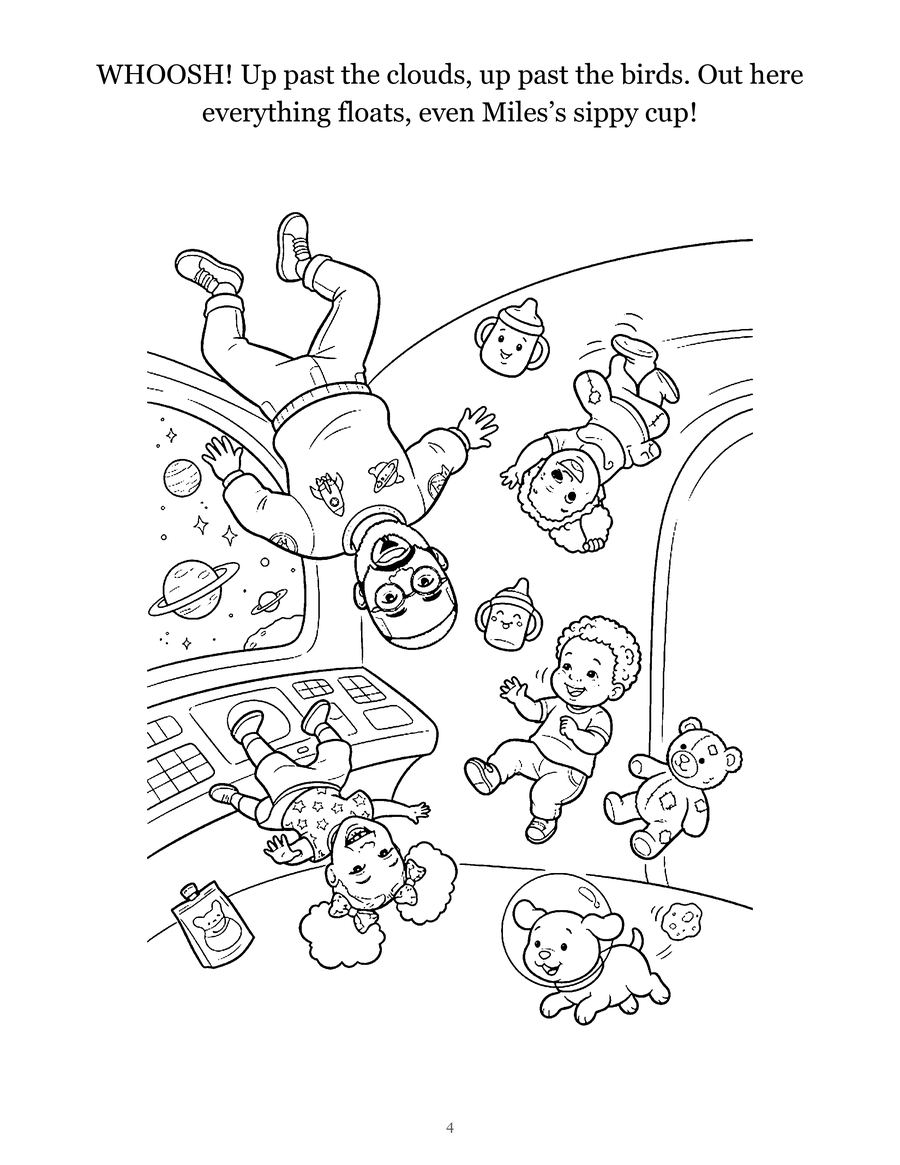
Coloring does help fine motor skills, in the plain sense that it is fine motor practice: gripping a crayon, pushing it hard enough to leave a mark, steering it and stopping it near an edge. What no one has shown is that coloring books are better at this than play dough, beads or a blank sheet of paper. Coloring is one good way to give small hands the thousands of repetitions they need. It is not a special one.
I went looking for the coloring-specific research after I made the first coloring storybook for my kids. There is very little. What exists is research on fine motor practice in general, and coloring fits inside it.
What fine motor skills coloring actually uses
"Fine motor" means the small muscles of the hands and fingers working with the eyes. A coloring session uses several pieces of that at once:
- Grip. Holding the crayon at all, then holding it with the fingers instead of the fist. The CDC lists holding a crayon or pencil "between fingers and thumb (not a fist)" as a milestone by 4 years.
- Force. Pressing hard enough for wax to show, but not so hard the crayon snaps. This is harder than it looks for a two-year-old.
- Eye and hand together. Aiming at a shape and staying roughly inside it. The CDC's 3-year checklist includes drawing a circle when you show them how, which is the same aim-and-steer skill.
- Using two hands differently. One hand colors, the other holds the paper still. Toddlers often forget the second hand, which is why taped-down paper helps.
Is coloring fine motor or gross motor?
Both, depending on age. Zero to Three describes early scribbles (about 15 months to 2 and a half) as usually the result of large movements from the shoulder, with the crayon held in the child's fist. That is closer to a gross motor activity with a crayon on the end.
An occupational therapy handout from NHS Wales explains the order things develop: shoulder and core stability first, then wrist, hand and finger strength, so the movement of writing shifts "from the whole arm, to the wrist, and finally to the fingertips." The same handout recommends building those underlying skills (painting at an easel, rolling pins, spray bottles, threading beads, finger songs) rather than pushing a grown-up pencil grip on a child whose hands are not ready.
So the honest answer to "fine or gross?" is: coloring is a fine motor activity that leans on gross motor stability, and the balance shifts toward the fingers between about 2 and 6. The full grip progression is in our guide to crayon grip by age.
What the research does and does not show
Fine motor practice helps. A 2020 systematic review in the Journal of Developmental and Behavioral Pediatrics looked at programs meant to improve fine motor skills in typically developing children from birth to 6, and found that 25 of 31 studies reported positive effects, with moderate effect sizes in the meta-analysis. The authors also say the findings need caution because many of the studies had a high risk of bias. Most programs ran in schools, led by teachers, and mixed many activities.
Fine motor skills go along with school skills. A 2025 meta-analysis of 11 studies found a medium correlation between preschoolers' fine motor skills and reading, and a larger one with math. The authors are clear that this is mostly correlation, and that the mechanisms are not worked out.
What is missing. Neither review isolates coloring. I could not find a trial where one group colored and another did something else and fine motor skills were compared. So when an article tells you coloring "builds fine motor skills" as if it were proven, the truthful version is: coloring is a kind of practice that falls inside a category of activity with promising evidence. That is enough reason to do it. It is not a reason to pick coloring over blocks.
There is also one trap worth naming. Correlation with reading and math does not mean coloring makes kids better readers. Children with stronger hands may differ in lots of other ways. For more on that, see benefits of coloring for toddlers, which walks through the most quoted study.
How to make coloring better fine motor practice
None of this needs a special product. A few changes make an ordinary coloring session work the hands harder:
- Go vertical sometimes. Tape paper to a wall, a door or an easel. The NHS Wales OT handout lists painting on an easel among the wrist-strengthening activities it recommends.
- Break the crayons. Short pieces are hard to hold in a fist, so small fingers end up doing more of the work. Chunky crayons are still right for young toddlers; see crayons vs markers for toddlers for which tools fit which age.
- Follow a sequence. A St. Jude occupational therapy handout orders early pencil tasks from easiest to hardest: scribble, then copy straight lines, then copy a circle, cross, square and triangle. You draw one, they copy it.
- Mix in other hand work. Play dough, peeling stickers, tearing paper for a collage, stringing big beads. Different tasks use the hand in different ways.
- Stop before it is a chore. Practice only counts if they keep coming back to it.
Picking pages that keep small hands working
The best fine motor coloring page is one your kid wants to finish. Big, simple shapes with thick outlines suit 2 and 3 year olds. Smaller areas and more detail suit 4 and 5 year olds whose grip has matured.
What holds attention is subject matter. Trucks, animals, a favorite character, or a picture of themselves. You can test that at home for free by turning a photo into a coloring page and seeing whether it beats the cartoon.
When to mention hand skills to a doctor
Kids vary a lot, and a child who prefers climbing to crayons is not behind. The CDC milestones are there to spot patterns, not to grade a page. If your child is not scribbling by 18 months, avoids using their hands for everyday things like feeding themselves, or loses skills they had, bring it up at the next checkup. A pediatrician can refer you to an occupational therapist if needed.
More guides on how kids grow through drawing and play are collected under coloring and development.
Questions parents ask
Does coloring help fine motor skills?
Yes, in the sense that it is fine motor practice: gripping a crayon, steering it and stopping it. No study has tested coloring books against other hand activities, so treat it as one good option, not a special one.
Is coloring a fine motor or gross motor skill?
Mostly fine motor, but young toddlers scribble with big movements from the shoulder, and shoulder and core stability support later pencil control. It starts as a whole-arm activity and moves to the fingers over several years.
What fine motor activities work as well as coloring?
Play dough, stringing large beads, tearing paper, peg boards, spray bottles, finger songs and painting at an easel all work the same hands. Mixing several is better than doing only one.
Should I correct how my toddler holds the crayon?
Usually not. A fist grip is typical in toddlers, and the CDC lists a finger-and-thumb grip as a milestone by 4. Building hand strength works better than forcing an adult grip early.
See your own family on a page, free
Practice goes better when a kid wants to keep going. Send one photo and we will draw a free coloring page of your family, no card needed.
Get a free sample page- Strooband et al., Motor Skill Interventions to Improve Fine Motor Development in Children Aged Birth to 6 Years, J Dev Behav Pediatr 2020
- Li et al., The relationship between fine motor skills and academic ability in children: a systematic review and meta-analysis, Front Sports Act Living 2025
- Aneurin Bevan University Health Board (NHS Wales) Children's Occupational Therapy, Development of a Tripod Pencil Grip
- Zero to Three, Learning to Write and Draw
- CDC, Milestones in Action: By 4 Years
- CDC, Milestones in Action: By 3 Years
- St. Jude Together, Therapy to Go: Paper and Crayons
More in Coloring and development
When do toddlers recognize themselves in mirrors and photos?
Babies enjoy mirrors by 6 months, but most recognize themselves around 18 to 24 months, and photos of the past make sense later. What the mirror test shows.
When do toddlers learn colors? Ages, mix-ups and how to help
Most toddlers know one color by 30 months and name a few by 4, per the CDC. Why color words come slowly, why mix-ups are normal, and easy ways to help.
When can toddlers start coloring? Ages, grips and first steps
Most kids scribble by 18 months, copy a circle around 3 and hold a crayon in their fingers by 4. What to expect at each age and how to start.