Guides / Coloring and development
Left-handed toddler? Coloring tips and when handedness shows
Most toddlers do not have a settled dominant hand yet, so a 2-year-old who colors with the left hand one day and the right the next is perfectly normal. The AAP says a child may show a clear tendency toward right- or left-handedness by the second birthday, but many children do not show a preference for several years, and some stay comfortable with both hands. If your child does turn out to be left-handed, the most useful thing you can do is nothing special: let them use that hand, and set up the coloring table so the left hand has room.
When handedness shows up
HealthyChildren.org's 2-year milestones say a toddler might use one hand more frequently than the other. "Might" is doing real work in that sentence.
A 2014 research review on how handedness develops found that young children display weak, inconsistent hand preference and are slower with both hands, and that consistency improves with age. The authors note that researchers still disagree about the exact age when adult-like patterns settle in. So there is no single answer to "when is handedness determined," only a gradual firming up through the preschool years.
How common is it? A 2020 meta-analysis of handedness studies gave a best overall estimate of 10.6 percent left-handed, about one person in ten. The same paper notes that cultural pressure against using the left hand lowers the numbers in some places.
Why you should never switch a left-handed child
For a long time, many schools made left-handed children write with the right hand. Some families still do it. A 2007 study of left-handed children in Taiwan found 59 percent had been pushed to convert to the right hand, and the author called for more attention to possible side effects.
There is no good reason to do it. The AAP is direct: there is no reason to pressure your toddler to use one hand over the other or to rush the natural process. A study of 96 left-handed children found their preferred left hand had the same advantage over the other hand that right-handed children's preferred hand has. In other words, left-handed kids develop coordination with their dominant hand the same way right-handed kids do.
And switching seems to leave a trace. A brain-imaging study of adults who had been made to write right-handed as children found persisting differences in how their brains handled handwriting, even after decades of right-hand writing. That was a small study of 11 people, and it does not show harm in daily life, but it is one more reason to leave the hand alone.
How to tell which hand your toddler prefers
You do not need to find out early, but if you are curious:
- Put things down in the middle. Place the crayon straight in front of your child, not on one side, and see which hand reaches for it.
- Watch over weeks. One session tells you little. Note which hand they use for drawing, spoons and throwing over a month.
- Do not hand the crayon to the right hand. It is easy to do without thinking, especially if you are right-handed.
- Expect switching. Swapping hands mid-scribble is common at 2 and 3. Tired hands swap too.
Handedness has little to do with how a grip develops. The stages from fist to tripod are the same for both hands; see crayon grip by age.
Coloring tips for a left-handed child
These are practical setup ideas, not clinical advice. They mostly come down to giving the left hand space and good tools.
- Seat them on the left end. At a shared table, a left-handed child next to a right-handed one ends up bumping elbows. Put the lefty on the left side, or across from you.
- Put the crayons on the left. A tray on the left side means no reaching across the page.
- Watch for smears. A left hand moving left to right drags over fresh marks. Crayons hardly smudge; wet markers and some gel pens can. If smearing frustrates them, use crayons or quick-drying markers. Our guide to crayons vs markers for toddlers compares the options.
- Tape the page down. Toddlers often forget to hold the paper with the helper hand, and the NHS Wales fine motor handout notes that children usually develop a dominant hand and a supporting hand for exactly these two-handed jobs. Tape helps until the right hand learns its role.
- Let them tilt the paper. If they turn the page to an odd angle, that is usually them finding a position where they can see what they are doing. Leave it.
- Show from beside, not across. If you demonstrate a shape, sit next to them and, if you can, use your left hand. Copying across a table is a mirror puzzle.
- Buy left-handed scissors when the time comes. The same NHS Wales handout says that if your child is left-handed, make sure they use left-handed scissors.
Pages that work for every hand
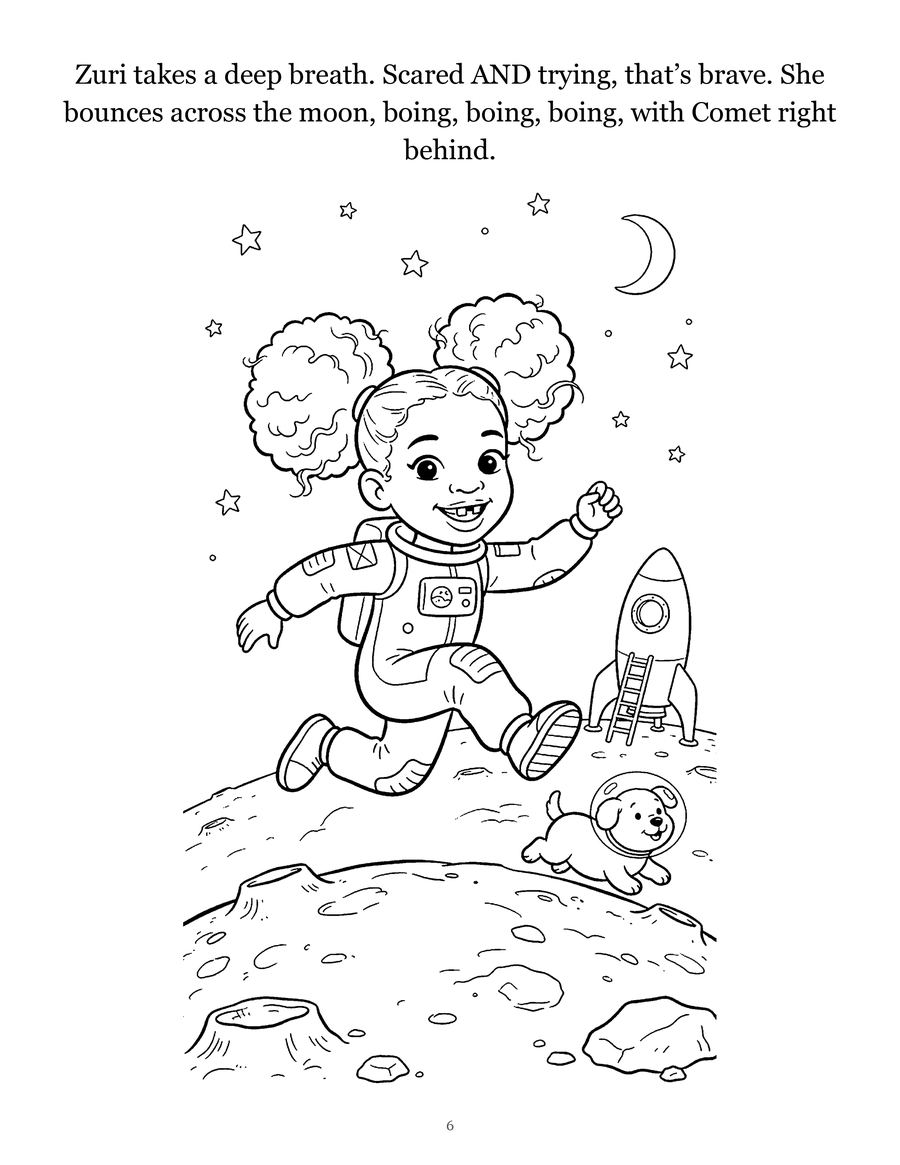
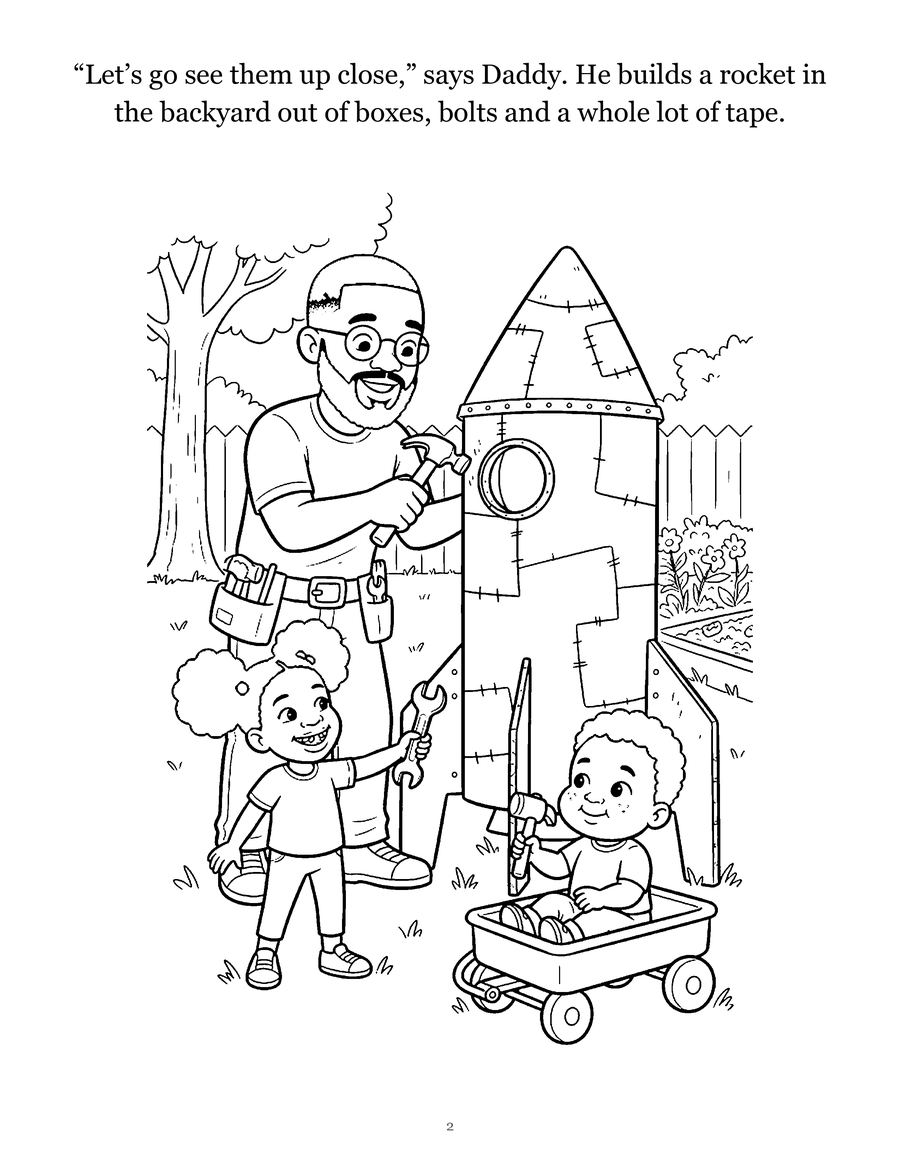
A left-handed toddler wants the same thing every toddler wants from a coloring page: big shapes, thick lines and something worth coloring. Pictures of themselves and their family are an easy win, and you can make one by turning a photo into a coloring page. Colorkin makes coloring storybooks starring your family from your photos, drafted with image tools and checked by a person; the pages work the same for either hand.
When to mention hands to your pediatrician
Using one hand more than the other is expected as kids get older. What is worth a conversation is anything about your child's hands that worries you, such as a hand that seems weaker, clumsier or rarely used compared with the other, or trouble with everyday tasks like feeding and dressing. Your pediatrician can look at the whole picture.
For more on how drawing develops, see drawing stages in children and the full set under coloring and development.
Questions parents ask
When is handedness determined in toddlers?
Some toddlers show a clear preference by their second birthday, according to the AAP, but many do not for several years, and some stay comfortable with both hands. Research finds young children's preferences are weak and inconsistent and become more consistent with age.
How can I tell if my toddler is left-handed?
Watch which hand they reach with and draw with over weeks, not one afternoon. Put the crayon down in the middle, in front of them, and see which hand picks it up. Switching back and forth is normal before about 3 or 4.
Should I encourage my child to use their right hand?
No. The AAP says there is no reason to pressure a toddler to use one hand over the other. Left-handed children develop coordination with their preferred hand just as right-handed children do.
What percentage of children are left-handed?
A large 2020 meta-analysis put the best overall estimate of left-handedness at about 10.6 percent, roughly one in ten people.
See your own family on a page, free
Every kid colors better with a page they care about, whichever hand they use. Send one photo and we will draw a free coloring page of your family, no card needed.
Get a free sample page- HealthyChildren.org (AAP), Hand and Finger Skills: 1 Year Olds
- HealthyChildren.org (AAP), Developmental Milestones: 2 Year Olds
- Scharoun and Bryden, Hand preference, performance abilities, and hand selection in children, Frontiers in Psychology 2014
- Papadatou-Pastou et al., Human handedness: A meta-analysis, Psychological Bulletin 2020
- Rudel, Healey and Denckla, Development of motor co-ordination by normal left-handed children, Dev Med Child Neurol 1984
- Siebner et al., Long-term consequences of switching handedness: a PET study on handwriting in converted left-handers, J Neurosci 2002
- Meng, The rate of handedness conversion and related factors in left-handed children, Laterality 2007
- Aneurin Bevan University Health Board (NHS Wales) Children's Occupational Therapy, Activities to Improve Fine Motor Skills
More in Coloring and development
When do toddlers recognize themselves in mirrors and photos?
Babies enjoy mirrors by 6 months, but most recognize themselves around 18 to 24 months, and photos of the past make sense later. What the mirror test shows.
When do toddlers learn colors? Ages, mix-ups and how to help
Most toddlers know one color by 30 months and name a few by 4, per the CDC. Why color words come slowly, why mix-ups are normal, and easy ways to help.
When can toddlers start coloring? Ages, grips and first steps
Most kids scribble by 18 months, copy a circle around 3 and hold a crayon in their fingers by 4. What to expect at each age and how to start.