Guides / Coloring and development
Screen time vs coloring: a realistic plan for toddlers
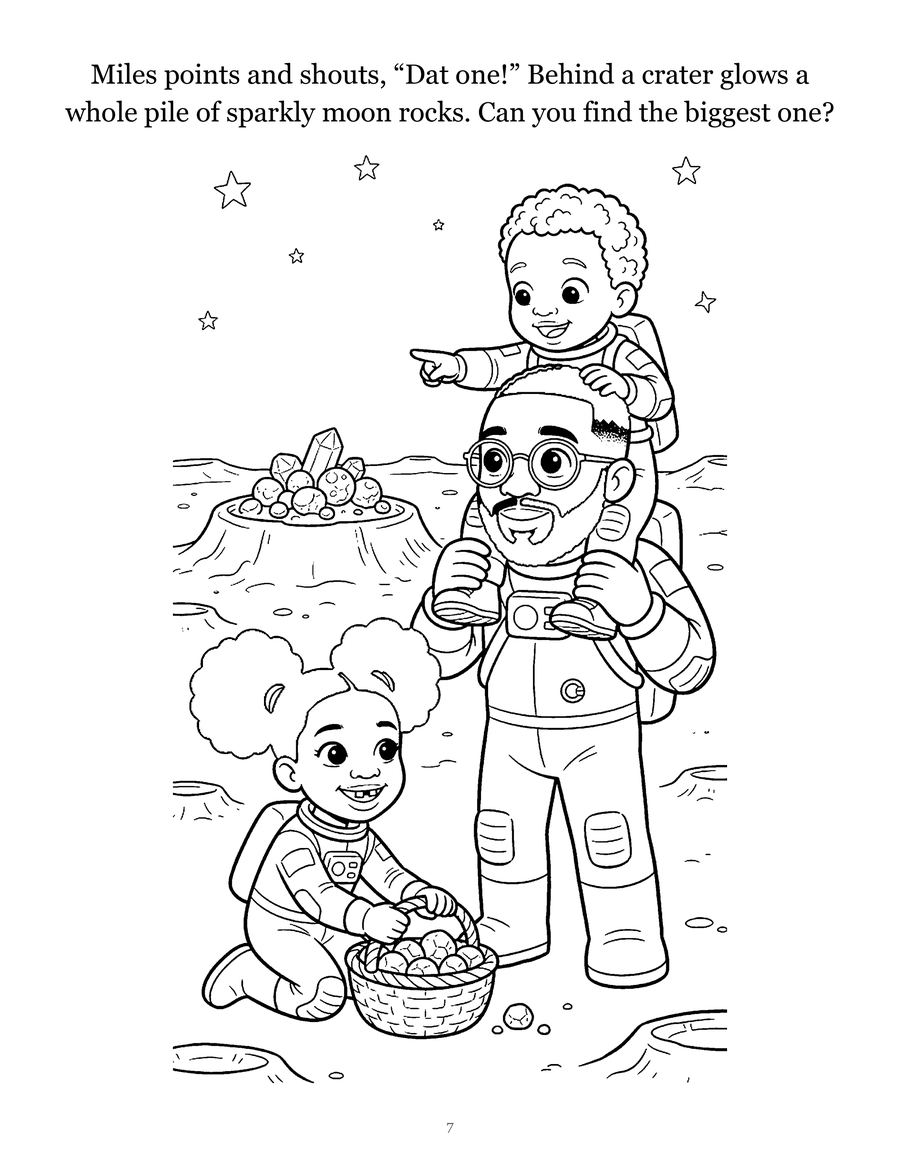
The American Academy of Pediatrics no longer frames toddler screen time as one magic number. Its 2026 policy says limits might range from under an hour a day for toddlers and preschoolers, and focuses on what screens displace: sleep, movement, reading, play and time together. The World Health Organization is stricter: no sedentary screen time for 1-year-olds, and no more than an hour for 2 to 4 year olds. Coloring is not a magic replacement for screens, but it is an easy, cheap thing to have ready in the moments a screen usually fills.
What the AAP and WHO actually say
The AAP, 2026. The newest AAP policy statement on children and media says time limits might range from under 1 hour a day for toddlers and preschoolers to 1 to 2 hours a day or more of entertainment media for school-age children and teens. It also says that "media and children" cannot be seen only through screen limits, and puts weight on how screens are designed and used. A few specifics from the same statement that matter for families with small kids:
- Infants under 18 months struggle to transfer information from a screen to the real world, though occasional brief, high-quality videos are not harmful.
- The effects of good content are strengthened by viewing together with a caregiver.
- Families should ensure opportunities for sleep, movement, reading, play, homework and family time, use one screen at a time, turn the TV off when no one is watching, and keep phone-free zones at meals, in bedrooms and in the hour before bed.
The AAP, 2016. The earlier statement for children 0 to 5 already emphasized shared media use and allowing the child time for other developmentally healthy activities, not only content or time limits.
The WHO, 2019. The WHO guidelines for children under 5 say that for 1-year-olds sedentary screen time is not recommended, and for 2 to 4 year olds it should be no more than 1 hour, less is better. The same guidance encourages interactive non-screen activities with a caregiver, such as reading, storytelling, singing and puzzles.
| Age | WHO | AAP 2026 |
|---|---|---|
| Under 18 months | No screen time under 1, none sedentary at 1 | Little learning from screens; brief quality video is not harmful |
| 2 to 4 years | No more than 1 hour, less is better | Limits might be under 1 hour a day; watch together when you can |
| All ages | Swap sitting for active play, protect sleep | Protect sleep, play, reading and family time; phone-free meals and bedrooms |
Why "just cut screen time" rarely works
Most parents do not hand over a phone because they think it is good for their kid. They hand it over at specific times: making dinner, a long wait, a phone call, a meltdown, the last hour before bed when everyone is tired. A rule with no plan for those moments tends to last about two days.
The calming moment deserves its own mention. In a study of 3 to 5 year olds, parents who frequently used mobile devices to calm their child saw more emotional reactivity months later, especially among boys and children with high-energy temperaments. It is a correlation, not proof, but it suggests that the screen as the main calm-down tool is the habit most worth replacing. Our guide on whether coloring calms kids down covers what the evidence says about coloring for that job, honestly, which is less than you might hope.
A realistic swap plan
Instead of a total ban, swap one screen moment at a time.
- Find your two worst screen moments. For most families it is the dinner-prep window and the waiting-room or restaurant wait. Start there, not everywhere.
- Set up the alternative before the moment arrives. A coloring page and crayons on the kitchen table before you start cooking. A small bag with a clipboard, three pages and a few crayons by the door. If you have to go find supplies, the phone wins.
- Rotate, do not repeat. Coloring on Monday, play dough on Tuesday, a picture book with a sibling on Wednesday, stickers on Thursday. Novelty is what screens have that a single crayon box does not.
- Make the page about them. Children stay longer with pictures they care about: their pet, their truck, their own family. You can make these free by turning a photo into a coloring page.
- Sit with them for the first five minutes. Starting together and then stepping away to stir the pot works far better than pointing at a crayon box from across the room.
- Keep the screens you value, on purpose. A show watched together, or a video call with grandparents, is different from solo scrolling. The 2026 AAP policy notes that video chatting can give children back-and-forth interaction.
- Write it down. The AAP's free Family Media Plan tool walks you through setting screen-free times and places for the whole family.
Screen-free activities that need almost no setup
These all work for 2 to 5 year olds with things most homes already have:
- Crayons on paper taped to the table, or to a wall at their height
- Coloring pages of things they love, printed at home (see how to print coloring pages)
- Play dough with a rolling pin and cookie cutters
- Picture books, including the same favorite for the tenth time
- Stickers and a sheet of paper to fill
- Washing plastic dishes in a bowl of water
- Building with blocks, cups or boxes
- Helping with simple jobs: tearing lettuce, matching socks
Coloring has a particular advantage for younger kids: it is fine motor practice, and it can be done side by side with a parent. Our guide on the benefits of coloring for toddlers goes into what that practice does and does not do.
What no one has shown
No study has tested coloring against screen time head to head, so there is no evidence that 20 minutes of coloring "undoes" 20 minutes of a show. The guidance is about balance and displacement: screens are a problem mainly when they crowd out the things young children need, like play, sleep, conversation and being read to. Any hands-on, together activity helps with that. Coloring is simply one that is cheap, quiet and easy to have ready.
Other guides on coloring and early development are under coloring and development.
Questions parents ask
How much screen time does the AAP recommend for toddlers?
The AAP's 2026 policy moved away from one fixed number and toward a family plan, but it says time limits might range from under 1 hour a day for toddlers and preschoolers. The WHO says no sedentary screen time for 1-year-olds and no more than 1 hour for 2 to 4 year olds, less being better.
Is coloring better than screen time?
No study compares coloring to screens directly. The point is not that coloring is special. It is one of the hands-on, together activities that the AAP and WHO say screens should not crowd out, along with reading, play, movement and sleep.
Do video calls count as screen time?
The AAP's 2026 policy notes that video chatting can offer back-and-forth interaction for children, which is different from watching alone. Many families treat calls with grandparents separately from shows.
What are good alternatives to screen time for a 2 year old?
Crayons and paper, play dough, picture books, blocks, water play, helping with simple chores, and outdoor time. The ones that work are set up and within reach before the moment you would usually hand over a screen.
See your own family on a page, free
The easiest screen swap is a page your kid asks for. Send one photo and we will draw a free coloring page of your family, no card needed.
Get a free sample page- American Academy of Pediatrics, Digital Ecosystems, Children, and Adolescents: Policy Statement, Pediatrics 2026 (full text)
- American Academy of Pediatrics, Media and Young Minds, Pediatrics 2016
- World Health Organization, To grow up healthy, children need to sit less and play more (2019 guidelines for children under 5)
- Radesky et al., Longitudinal Associations Between Use of Mobile Devices for Calming and Emotional Reactivity and Executive Functioning in Children Aged 3 to 5 Years, JAMA Pediatrics 2023
- HealthyChildren.org (AAP), Family Media Plan tool
More in Coloring and development
When do toddlers recognize themselves in mirrors and photos?
Babies enjoy mirrors by 6 months, but most recognize themselves around 18 to 24 months, and photos of the past make sense later. What the mirror test shows.
When do toddlers learn colors? Ages, mix-ups and how to help
Most toddlers know one color by 30 months and name a few by 4, per the CDC. Why color words come slowly, why mix-ups are normal, and easy ways to help.
When can toddlers start coloring? Ages, grips and first steps
Most kids scribble by 18 months, copy a circle around 3 and hold a crayon in their fingers by 4. What to expect at each age and how to start.