Guides / Coloring and development
Coloring inside the lines: what age, and should you push it?
Most children start staying roughly inside the lines between about 4 and 6. It is not an official milestone, and no pediatric source gives an exact age, but it follows the skills that are on the checklists: holding a crayon with the fingers instead of the fist (by about 4) and copying shapes like squares and triangles (around 3 to 5). Before that, coloring over the lines is normal. It is not carelessness, and it is not something to correct.
Why staying in the lines comes so late
Coloring inside a shape asks a small child to do several hard things at once: grip the crayon with the fingers, steer it, see where the edge is, and stop before crossing it. Each of those develops on its own schedule.
Zero to Three describes the early stages clearly. From about 15 months to 2 and a half, scribbles are usually the result of large movements from the shoulder, with the crayon held in the fist. Between 2 and 3, scribbles become more controlled and children gradually move to holding the crayon between thumb and pointer finger. Only from about 3 to 5 does Zero to Three describe more control in the way the child handles the crayon or marker, along with planning and more detail.
An occupational therapy handout from NHS Wales explains why it takes years: control develops from the whole arm, to the wrist, and finally to the fingertips. Staying inside a small petal on a flower is a fingertip job. A two-year-old is still coloring from the shoulder.
What to expect at each age
| Age | What coloring usually looks like | Signs the control is coming |
|---|---|---|
| 1 to 2 | Big scribbles, often off the page | Makes marks on purpose, enjoys the result |
| 2 to 3 | Controlled scribbles, circles, back-and-forth lines, mostly over the outlines | Starts using fingers, not just fist |
| 3 to 4 | Colors near a big shape, plenty of overlap | Copies squares and draws circles and squares |
| 4 to 5 | Stays mostly inside large areas, small areas still messy | Holds a crayon between fingers and thumb, copies a triangle |
| 5 to 6 and up | Neater edges, chooses to color carefully when the page matters to them | Prints some letters |
The middle column is not a checklist. It is what a lot of kids do, and plenty of kids who are developing well will be a year ahead or behind. The right column links to the actual milestones, which are the better thing to watch. If those are on track, the coloring will follow.
For the fuller picture of how drawing develops, see drawing stages in children. For grip specifically, see crayon grip by age.
Should kids color inside the lines at all?
Inside the lines is a skill, not a virtue. There are good reasons not to make it the goal of coloring for a young child:
- It is not developmentally fair before about 4. Asking a child who still grips with a fist to stay inside a small shape is asking for something the hand cannot yet do.
- Correction turns play into a test. The point of coloring at 2 or 3 is getting lots of repetitions in, and kids repeat what they enjoy. The guide on benefits of coloring for toddlers walks through what coloring at that age is actually good for.
- Free drawing matters too. A blank page asks a child to plan and invent. A coloring page asks them to control. Both are useful, and a mix is better than either alone.
That said, there is nothing wrong with a 5-year-old who wants a neat page. Many children start caring about it on their own, usually when the picture means something to them. Wanting to do it well is the motivation that makes the practice stick.
What no one has shown is that coloring neatly, as such, leads to better handwriting or school results. The research on fine motor practice is about practice in general, not coloring books. Our guide on whether coloring helps fine motor skills covers what that evidence does and does not say.
How to help if your child wants neater coloring
If your child is 4 or older and asking for help, or getting frustrated with their own pages, these steps work without buying anything:
- Start with bigger shapes. Big areas and thick outlines (a bold marker line, at least as wide as a crayon) give a wide margin for error. Shrink the shapes as control improves.
- Trace the edge first. Have them go slowly around the inside of the outline, then fill the middle. This is how many adults color too.
- Practice the shapes underneath. A St. Jude occupational therapy sheet orders early tasks from easiest to hardest: scribble, copy vertical and horizontal lines, then copy a circle, a cross, a square and a triangle. You draw one, they copy it. These are the same aim-and-stop skills that coloring inside a shape needs.
- Use short crayons. Broken crayon pieces are hard to fist, so the fingers do more of the steering.
- Tape the paper down. A sliding page is half of most "messy" coloring at this age.
- Go vertical. The NHS Wales handout recommends painting at an easel and similar activities to build wrist strength, which is part of what makes small, controlled strokes possible.
- Praise the effort, not the edges. "You went really slowly on the dog" helps more than "you stayed in the lines".
Pages that make kids want to try
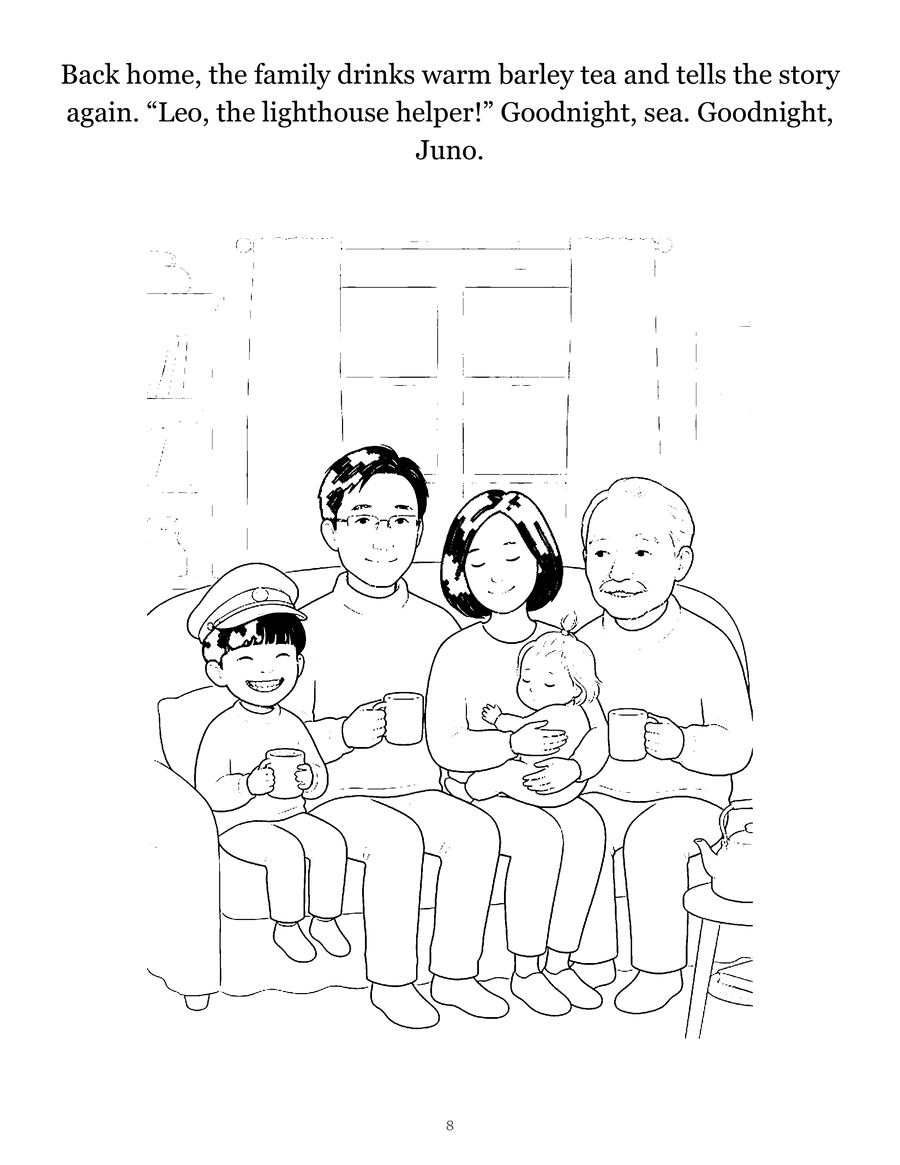
A child will slow down for a picture they care about. That is usually a favorite animal, a truck, a character, or a picture of themselves and the people they love. You can make one for free by turning a family photo into a coloring page, with thick outlines and big areas sized for your child's age.
I made the first coloring storybook for my own two kids, and the pages they come back to are the ones that show them. A page like that is the easiest place to practice going slowly.
When to mention it to a doctor
Messy coloring alone is not a reason to worry. The milestones are what matter. HealthyChildren.org lists, among possible signs of delay at 3 to 4, a child who cannot grasp a crayon between thumb and fingers or has difficulty scribbling, and at 4 to 5, one who seems uncomfortable holding a crayon. If that sounds like your child, bring it up at the next checkup. A pediatrician can refer you to an occupational therapist if needed.
More guides on drawing, grip and early skills are collected under coloring and development.
Questions parents ask
At what age do kids color inside the lines?
There is no official milestone for it. In practice most children start staying roughly inside big shapes between about 4 and 6, after they can copy a square or triangle and hold a crayon with their fingers. Neat edges on small areas come later still.
Is it bad if my 3 year old colors outside the lines?
No. At 3 most children are still in the scribbling and early shapes stage, and many still grip with a fist. Coloring over the lines is what the age looks like.
Should I teach my child to color inside the lines?
You do not need to. If your child asks for help, or is 5 or 6 and wants neater pages, try bigger shapes, thicker outlines, short crayons and tracing the edge first. Do not correct a younger child's page.
Does coloring inside the lines prepare kids for handwriting?
It uses some of the same control: aiming, steering and stopping a crayon. No study shows that coloring neatly makes handwriting better, so treat it as one kind of practice, not a required step.
See your own family on a page, free
A page a kid cares about is worth the effort of staying near the edges. Send one photo and we will draw a free coloring page of your family, no card needed.
Get a free sample page- Zero to Three, Learning to Write and Draw
- CDC, Milestones in Action: By 4 Years
- HealthyChildren.org (AAP), Developmental Milestones: 3 to 4 Year Olds
- HealthyChildren.org (AAP), Developmental Milestones: 4 to 5 Year Olds
- St. Jude Together, Therapy to Go: Paper and Crayons
- Aneurin Bevan University Health Board (NHS Wales) Children's Occupational Therapy, Development of a Tripod Pencil Grip
More in Coloring and development
When do toddlers recognize themselves in mirrors and photos?
Babies enjoy mirrors by 6 months, but most recognize themselves around 18 to 24 months, and photos of the past make sense later. What the mirror test shows.
When do toddlers learn colors? Ages, mix-ups and how to help
Most toddlers know one color by 30 months and name a few by 4, per the CDC. Why color words come slowly, why mix-ups are normal, and easy ways to help.
When can toddlers start coloring? Ages, grips and first steps
Most kids scribble by 18 months, copy a circle around 3 and hold a crayon in their fingers by 4. What to expect at each age and how to start.